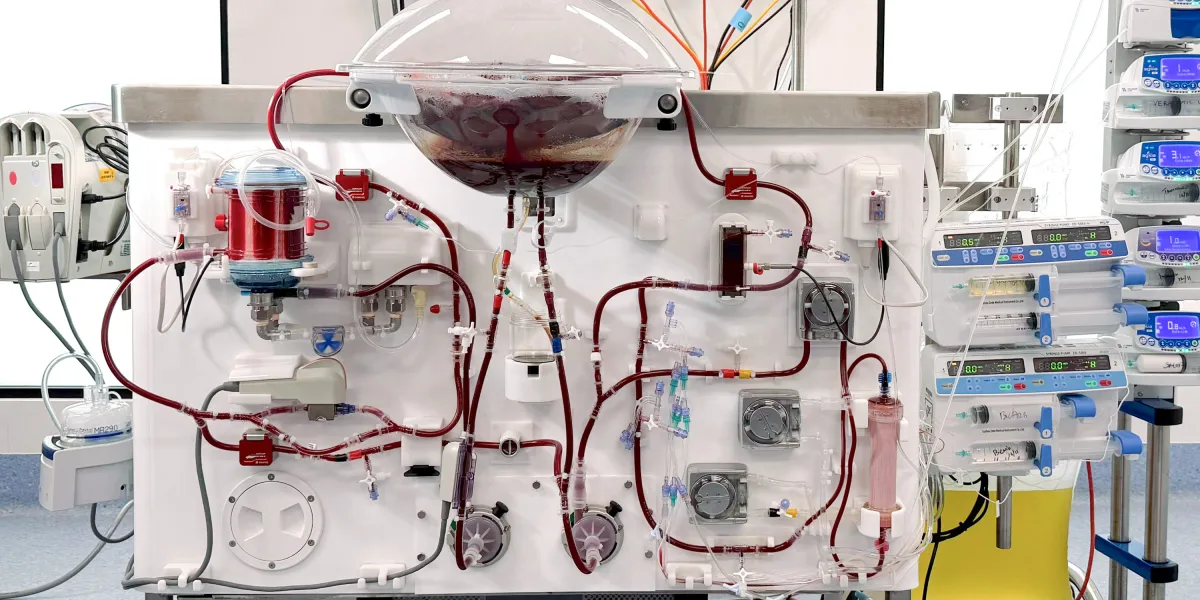
Researchers in Australia say they kept a human liver alive outside the body for seven weeks, on a system of automated pumps and sensors. The work is described in an interview, and the details are pending publication.
The team was led by Carlo Pulitano, a transplant surgeon at the Royal Prince Alfred Hospital and a professor at the University of Sydney. Pulitano said the system fed the organ nutrients, supplied it with blood, and removed waste. He compared the setup to "an artificial body." The system's official name is the Extended Organ Perfusion System.
Pulitano said his group is the only one to have maintained a human liver under fully normothermic, or body-temperature, conditions for seven weeks. The previous record for an internal organ kept alive outside the body was set in Switzerland several years ago, at around two weeks, also for a liver.
Pulitano said automation was the key. During a meeting in Switzerland earlier this year, the Sydney team described perfusing 55 human livers. For livers placed on the automated system, average survival time tripled to about four weeks.
Most transplant organs survive only a few hours on ice. Surgeons have increasingly used perfusion systems that pump warm or cold fluid through an organ, which can rough