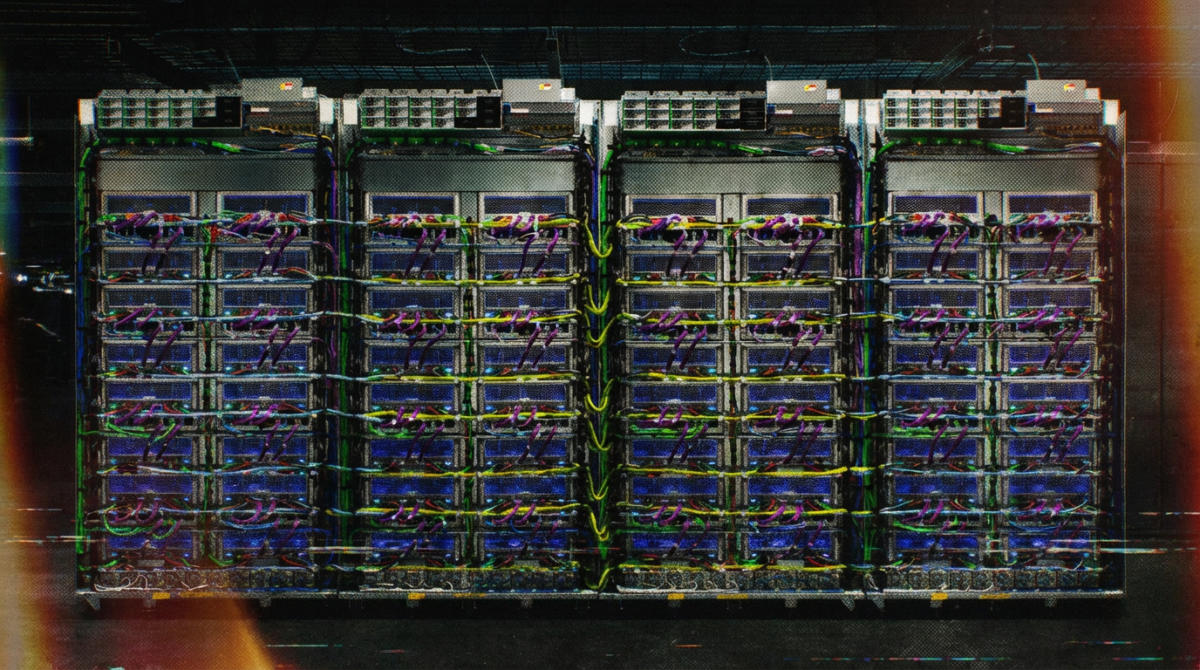
Google says it has shipped four TPU systems in a single year, a first for the company. The newest two, the TPU 8tx and the TPU 8i Max, are built on existing silicon rather than a new chip generation. Google calls that modular approach a deliberate choice that lets it deliver new hardware in months rather than years. The pace is impressive, and it matters because it signals that Google wants its in-house chips to compete with Nvidia for outside customers, not just to power its own services.
The TPU 8tx is aimed at enterprises and government agencies handling confidential data. According to Google, data and model weights stay protected and isolated even while they are being processed, closing the gap that normally exists once data is decrypted in memory. Nvidia already offers a comparable feature for its GPUs. That parity is the point: confidential computing is becoming a checklist item for serious buyers, and Google is right to treat it as table stakes rather than a differentiator.
The TPU 8i Max addresses memory bandwidth, which the report identifies as the chokepoint when AI agents work across large codebases or hours of video. Placing two TPU 8i chips on one package doubles compute, memory, and memory bandwidth in the same rack format. Those are useful claims, but they are Google's claims, and the report offers no independent benchmarks to verify the performance gains or the per-square-meter efficiency argument.
I would also watch the software story closely. Google has released TorchTPU as open source so that PyTorch code runs on TPUs with minimal changes, and says vLLM and SGLang are supported. Lowering switching costs is the right move for a company trying to win customers from Nvidia's entrenched ecosystem. Still, "minimal changes" is a phrase that deserves scrutiny from any engineering team weighing a migration, and buyers should demand concrete migration evidence before committing budgets.
The broader trend is clear: the industry is shifting from expensive training runs toward inference, and Amazon, Microsoft, and OpenAI are all building their own accelerators. Nvidia has responded by strengthening its inference offering through its acqui-hire and licensing deal with Groq. My advice to customers is simple. Welcome the competition, test the claims against your own workloads, and ask Google to publish the numbers that would let anyone check its story.