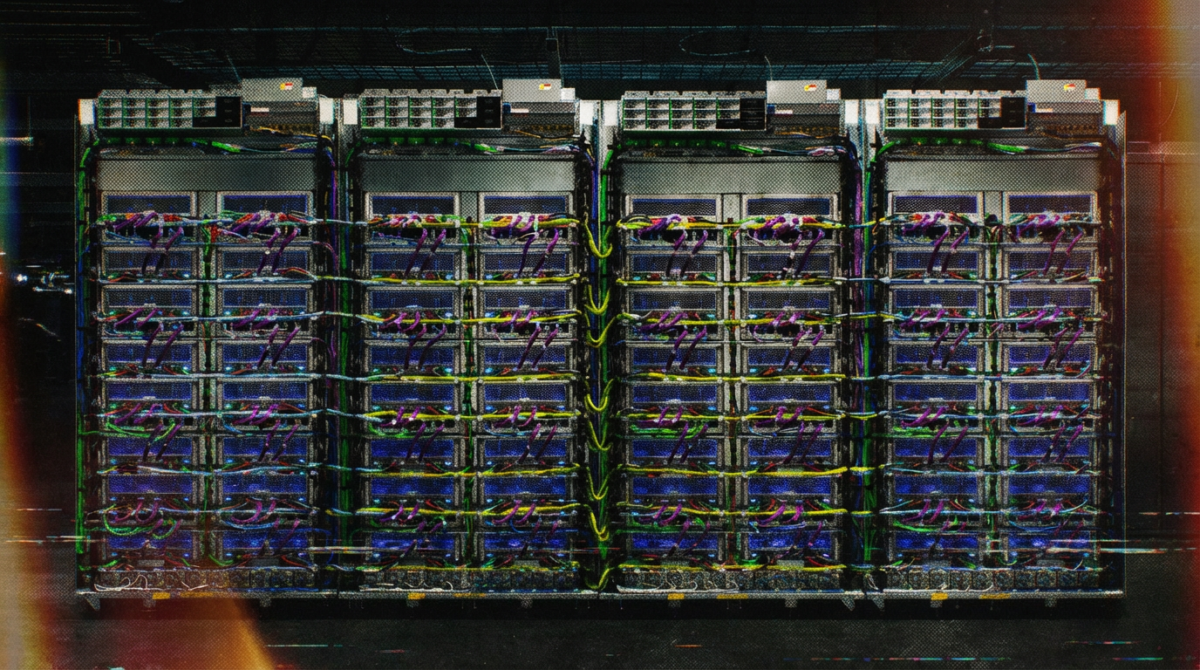
Google has added two systems to its eighth-generation TPU lineup: the TPU 8tx for confidential computing and the TPU 8i Max for memory-intensive workloads. Google says this brings its total to four TPU systems shipped within one year.
Both new variants use existing silicon. Google describes them as new system configurations, with different packaging, networking, and memory setups around the same processor, rather than a new chip generation. The company says this modular approach lets it deliver new hardware variants in months rather than years.
The TPU 8tx targets enterprises and government agencies working with confidential data. Data is normally decrypted in memory when a processor works with it. According to Google, the TPU 8tx keeps data and model weights protected and isolated during active use. Nvidia already offers a comparable feature for GPUs through its confidential computing architecture.
The TPU 8tx uses the Boardfly network Google developed for real-time inference. Google says it delivers up to twice the latency reduction compared to the TPU 8t. Google states that enterprises can use a single system to fine-tune models, distill large models into smaller ones, and train AI agents with reinforcement learning, without moving sensitive data between clusters.
The TPU 8i Max addresses mem