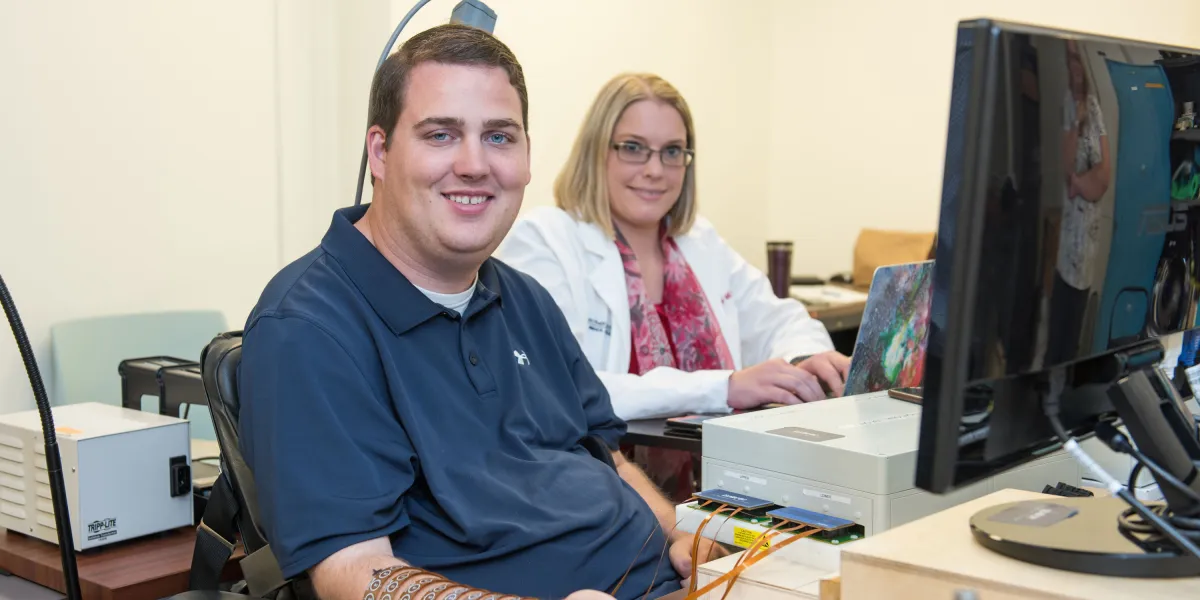
The BCI Pioneers Coalition has published a set of guidelines for brain-computer interface trials, and the group says they are meant to help academics, clinicians, and companies run ethical trials that respect participant autonomy. The guidelines are organized into 13 categories and were developed over the last year by members of the coalition, which Ian Burkhart cofounded in 2022.
Burkhart was paralyzed from the chest down after a diving accident in 2010. In 2014, when he was 19, he became the first person to trial a brain implant designed for hand control. The implant had 96 electrodes placed in the part of his brain that controls movement. Algorithms on a computer interpreted those signals and sent them to a sleeve of electrodes on his arm. Burkhart used the system to pour beads, move small objects, and play Guitar Hero during lab visits.
Burkhart took part in two multiyear trials while the array was implanted, a period of seven and a half years. He says he went to the lab two or three days a week, for four hours at a time. He describes the experience as "a fantastic experience," but says there are things he would do differently.
The guidelines address several areas. One recommends recognizing and compensating participants. Burkhart suggests that participants could be listed as co