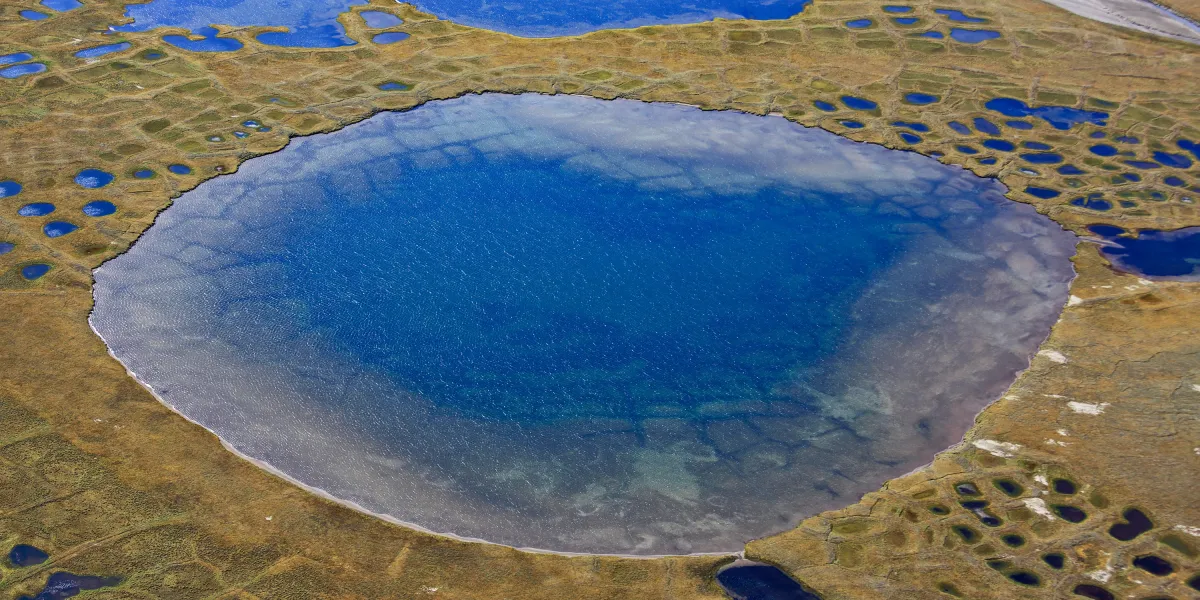
A study in Environmental Research Letters in September, which synthesized results from previous papers, found that additional carbon dioxide and methane released from thawing permafrost, intensifying wildfires, hotter lakes and reservoirs, and wetter, warmer wetlands could drive global average temperatures up 0.2 °C to 0.4 °C this century. That would come on top of the 2.6 °C of warming above preindustrial levels that modelers expect through 2100.
According to the report, none of the models that inform the major UN climate reports account for all of these feedback effects, and many incorporate none. The report says this leaves a gap in estimates of how much the planet could warm and how quickly nations would need to cut emissions.
A separate analysis in One Earth, published in March, examined the feedback problem for international climate goals. It concluded that three regional sources of warming-driven emissions, namely thawing permafrost, increasing boreal forest fires, and warming tropical wetlands, may shorten by as much as 25% the time before the planet consistently breaches the 1.5 °C and 2 °C thresholds.
Sam Abernethy, the lead author of the paper and a climate scientist at Spark Climate Solutions, a San Francisco-based n