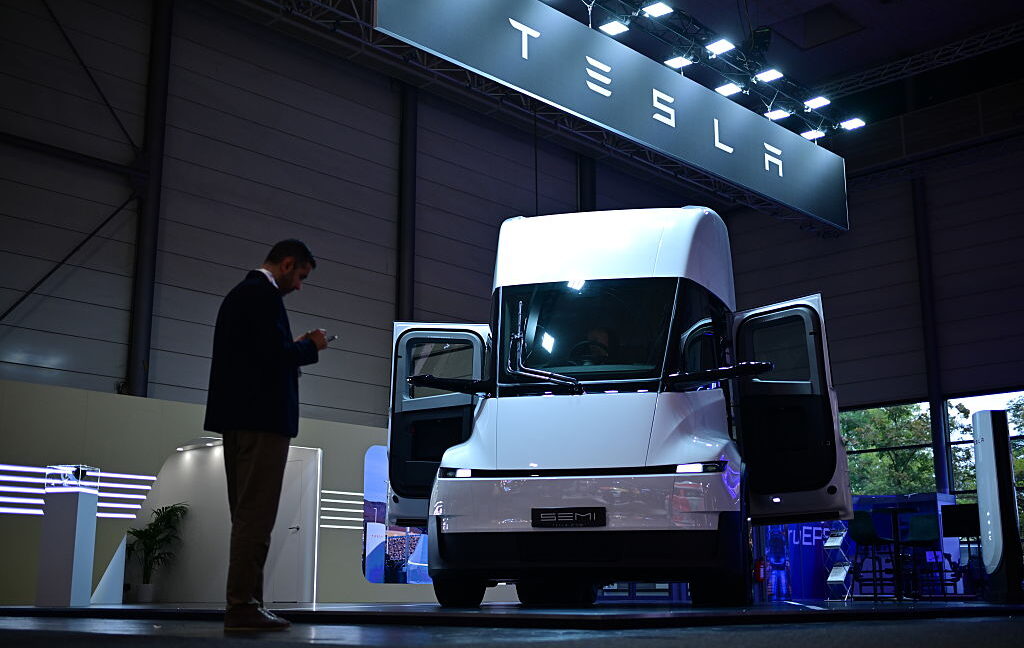
Tesla's Cybertruck sibling is finally shipping at scale, but the infrastructure required to support it remains fragmented and incomplete.
The Tesla Semi, with its claimed 500-mile range per charge, represents a genuine technical achievement. The vehicle manages realistic highway speeds while carrying full commercial loads, addressing one of the core barriers to electric truck adoption. Early fleet operators like PepsiCo and Walmart have placed orders, signaling that buyers see value in the platform despite its premium price tag.
The problem arrives the moment these trucks leave the depot.
The electric trucking infrastructure ecosystem remains scattered across competing charging networks, each with incompatible standards, varying power outputs, and uncertain uptime. Unlike Tesla's vertically integrated Supercharger network for consumer vehicles, the company has not deployed comparable infrastructure purpose-built for heavy-duty trucking. Third-party networks like Electrify America, EVgo, and Plug Power operate independently, leaving operators to navigate fragmented coverage maps with gaps in critical corridor routes.
Range anxiety transforms into something more concrete at scale. A truck driver cannot simply pull into a random charging station. Routes must be pre-planned around available chargers with sufficient power delivery. The 500-mile range solves one problem only if charging stations exist at predictable intervals along major freight corridors. Today, they often do not.
Fleet operators face calculus that personal EV buyers never encounter. Downtime translates directly to lost revenue. A Tesla Semi requires roughly two hours for a meaningful recharge at optimal conditions, compared to 15 minutes for a diesel fill-up. Over a long haul, this compounds into schedule friction that existing logistics software cannot yet handle. The economics only work if charging infrastructure becomes both ubiquitous and reliable.
Federal funding through the Inflation Reduction Act and infrastructure bills has allocated capital for truck charging deployment, but implementation lags far behind timelines. Private trucking networks are beginning to invest in proprietary fast-charging infrastructure, but coverage remains concentrated around major hubs rather than distributed along rural routes where real trucking happens.
Tesla's choice to exclude its Cybertruck from the Supercharger network suggests the company may eventually build dedicated Tesla Semi charging infrastructure, but no official announcements detail rollout plans or timelines. Competitors like Volvo and Daimler are developing electric trucks as well, and most rely on third-party networks rather than proprietary systems.
The Semi's technical capabilities are real. The infrastructure required to unlock those capabilities remains incomplete. Without coordinated investment in charging networks, the vehicle becomes a testbed for early adopters rather than a broad commercial solution. PepsiCo's deployment will generate data about real-world performance, but success at fleet scale demands something the trucking industry has never required before: unified infrastructure planning across competing operators and government agencies.
The truck itself is ready. The roads are not.