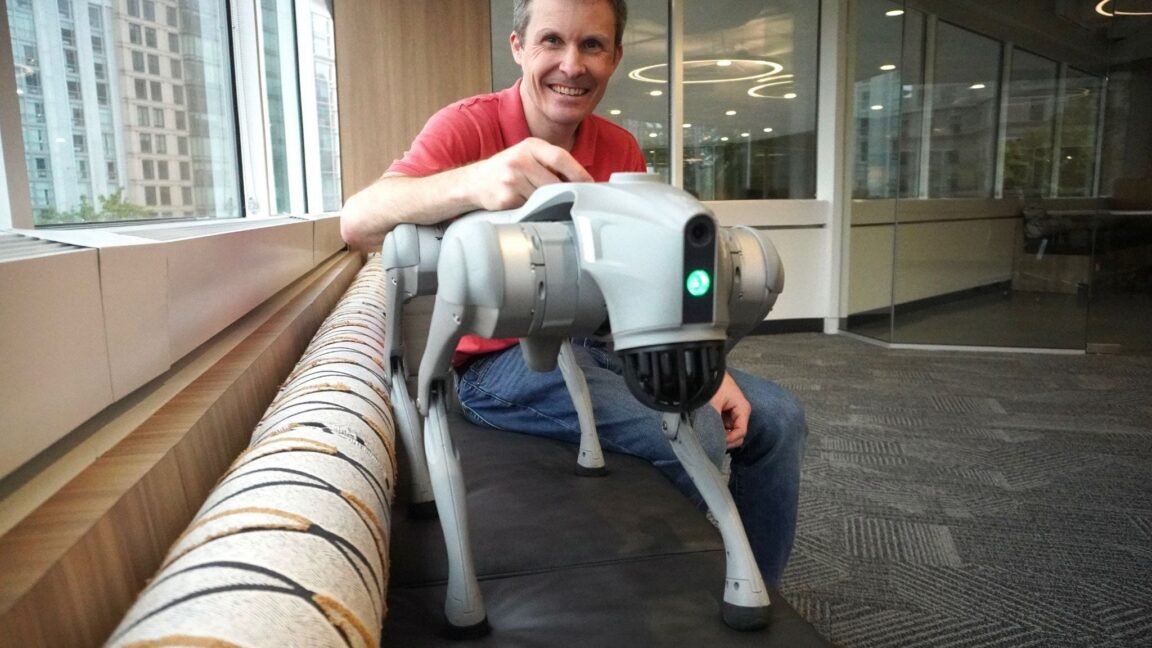
# A $4,000 Robot Dog Reveals Why China's Unitree Dominates Hardware Innovation
Unitree, a Chinese robotics firm, has emerged as a formidable player in the quadruped robotics market by delivering functional, affordable robot dogs that undercut Western competitors by thousands of dollars. An Ars Technica reporter spent $4,000 on one of Unitree's models, a purchase that illuminates why the company deserves serious attention from technologists and industry observers.
Unitree's robot dogs perform real work. They navigate stairs, climb rough terrain, and respond to voice commands with surprising reliability. The company produces multiple models at different price points. The Go2, their consumer entry point, costs under $1,500 for the basic version. Higher-end models like the H1 humanoid and B2 industrial variant serve different use cases. This product range breadth matters. It shows Unitree doesn't chase a single niche.
Western robotics companies like Boston Dynamics, owned by Hyundai, have historically dominated headlines. Boston Dynamics robots are objectively more advanced in some ways. Their Atlas humanoid displays remarkable agility and balance. Yet Boston Dynamics has generated minimal revenue. The company burned through funding for years without shipping products at scale. Unitree took a different approach. They focused on getting functional robots into customer hands at accessible prices.
The cost difference reflects strategic choices. Unitree manufactures domestically in China, maintaining control over supply chains and labor costs. They leverage modular design principles that simplify manufacturing and reduce waste. Western companies often pursued perfection before commercialization. Unitree shipped working products first and iterated publicly.
Unitree's dominance extends beyond consumer robotics. Their quadruped designs appear in research institutions worldwide. Academic labs buy Unitree robots because they're affordable and reliable enough for real experiments. This creates a feedback loop. More researchers use Unitree hardware, publish papers using Unitree robots, and influence the next generation of roboticists to choose Unitree platforms. Network effects matter even in hardware.
The company's valuation reflects this trajectory. Unitree completed Series C funding in 2023, raising capital at a valuation that positioned it among the most valuable private robotics companies globally. Investors recognize that the robotics market will consolidate around companies that can manufacture at scale and price competitively.
China's robotics sector benefits from integrated supply chains, government incentives, and manufacturing expertise developed through decades of electronics production. Unitree operates within this ecosystem. They iterate faster and cheaper than competitors in North America or Europe.
For individual buyers, owning a Unitree robot dog today costs roughly what a high-end gaming laptop costs. The hardware continues functioning even if Unitree never releases another software update. That's not true for many robotics startups that rely on cloud connectivity or subscription services.
The reporter's $4,000 investment reveals a broader truth. Robotics is becoming a consumer category. Not a research curiosity. Not a corporate showcase. Actual products ordinary people can purchase and operate. Unitree moved the needle on that transition. Their robot dogs work. They're affordable. They ship consistently. In competitive markets, those three factors compound into dominance.