# Coroner Confirms Measles Death of 6-Week-Old as RFK Jr. Continues Vaccine Skepticism
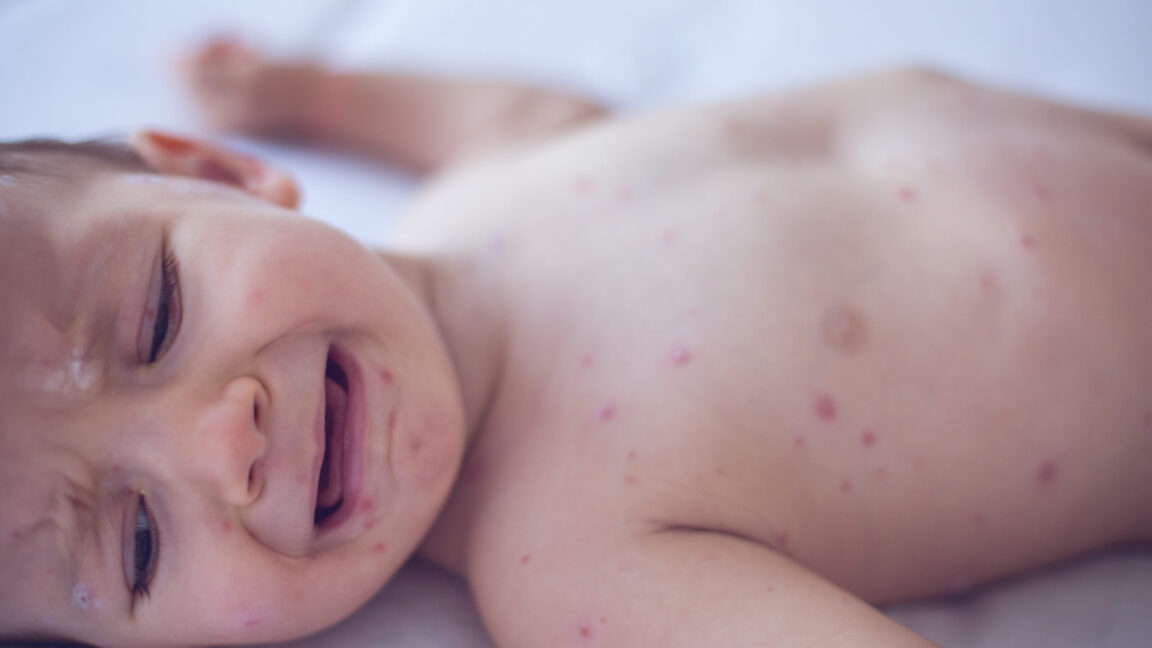
A coroner has confirmed that measles killed a 6-week-old infant, directly contradicting claims by Robert F. Kennedy Jr. that the death was misattributed to the disease. The case underscores the real-world consequences of vaccine hesitancy rhetoric amplified by high-profile figures during a resurgence of preventable infectious diseases.
The infant, too young to receive the measles vaccine under standard immunization schedules, contracted the virus and died. Measles vaccination begins at 12 months of age, leaving children under one year dependent on community immunity through vaccination rates. When vaccination rates fall below critical thresholds, infants become vulnerable to outbreaks of a disease that was declared eliminated in the United States in 2000.
RFK Jr., a prominent vaccine skeptic and former presidential candidate, disputed the coroner's determination. His denial of documented disease deaths reflects a pattern of challenging medical findings when they contradict anti-vaccine messaging. This approach creates public confusion about cause of death and undermines trust in public health institutions during outbreaks.
Measles kills roughly one to two children per thousand infected. The disease causes high fever, rash, and respiratory complications. In unvaccinated populations, it spreads rapidly. The virus killed an estimated 2.6 million people annually before vaccines existed.
The incident occurs amid measles case clusters in multiple U.S. regions. Vaccination rates have declined in pockets of the country where anti-vaccine sentiment has gained traction. Kennedy's prominent role as a vaccine skeptic, amplified through media appearances and social platforms, influences parental vaccination decisions. His 2024 presidential campaign centered vaccine safety doubts that virologists and immunologists have thoroughly debunked.
Public health officials face increasing difficulty communicating vaccine benefits when respected voices promote contrary narratives. The coroner's confirmation represents an attempt to establish factual clarity in a polarized environment where cause of death itself becomes contested.
Kennedy has built influence among certain demographics by questioning vaccine safety protocols and claiming cover-ups by health authorities. These narratives persist despite decades of safety monitoring data and millions of vaccinated individuals worldwide. Each preventable death strengthens arguments for stronger vaccine promotion, yet Kennedy's platform continues expanding.
The case highlights the gap between scientific consensus and public perception. Measles protection requires roughly 95 percent population vaccination coverage to prevent outbreaks. When coverage falls below that threshold, disease resurges among the most vulnerable. A 6-week-old has no choice in vaccination status. The infant depends entirely on others' compliance with immunization schedules.
Health authorities increasingly face pressure to respond directly to vaccine skepticism rather than focusing solely on disease prevention. Traditional public health messaging proves insufficient when misinformation reaches larger audiences through influential skeptics. The coroner's statement represents a medical system pushing back against narrative distortion around preventable deaths.
This case will likely persist in vaccine debates. Skeptics may continue questioning the coroner's findings despite medical expertise supporting the determination. The dynamic creates ongoing tension between documented medical facts and alternative interpretations promoted by vaccine hesitancy advocates.