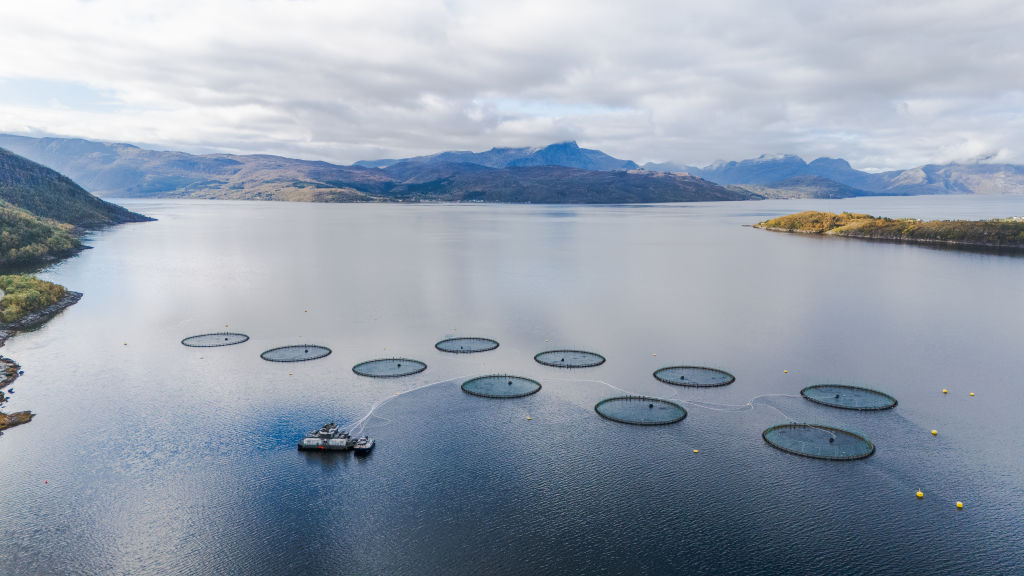
# Farmed Salmon Nutritional Decline Tied to Feed Composition and Environmental Costs
Farmed salmon contains fewer omega-3 fatty acids and other key nutrients than it did decades ago, according to recent research examining how changes in aquaculture feed have reshaped the nutritional profile of one of the world's most consumed farmed proteins.
The decline stems directly from alterations in salmon feed formulations over the past 20 years. Fish farmers have progressively replaced marine-based ingredients like fish meal and fish oil with plant-based alternatives such as soy, canola oil, and other vegetable sources. This switch reduces production costs and addresses sustainability concerns around wild fish stocks used for feed. However, the tradeoff reduces the omega-3 content and other marine-derived nutrients that made farmed salmon nutritionally attractive compared to land-based proteins.
Wild salmon obtain their omega-3s by consuming smaller fish rich in these compounds. Farmed salmon fed plant-based diets produce lower concentrations of EPA and DHA, the two omega-3 variants most valuable for human health. Consumers purchasing farmed salmon believing they receive significant cardiovascular and cognitive benefits from these omega-3s face a diluted nutritional proposition than they might have expected.
The environmental calculus behind this shift complicates the narrative around farmed fish as a sustainable protein. Plant-based feed ingredients require massive agricultural inputs. Soy production drives deforestation in regions like the Brazilian Amazon and Paraguay, directly contributing to habitat loss and climate emissions. Canola cultivation consumes significant freshwater and fertilizer resources. The feed conversion ratio for farmed salmon means producers require multiple kilograms of plant-based feed to produce one kilogram of fish. This amplifies the total environmental footprint of farmed salmon production, even though the switch away from wild-caught forage fish addressed one sustainability problem.
Aquaculture advocates long promoted farmed salmon as more sustainable than wild-caught alternatives. Removing pressure from wild populations reduced bycatch and overfishing. Farmed salmon requires less energy transport than many imported proteins. These arguments held partially true when feed composition included marine ingredients sourced responsibly. The transition to plant-heavy diets sacrificed this advantage without fully delivering on either nutritional or environmental promises.
Research into salmon feed alternatives continues. Some producers experiment with insect-based proteins, algae-derived oils, and other novel ingredients. These options show promise but face scaling challenges and cost barriers that prevent widespread adoption. The economics of aquaculture production remain driven by margin optimization, pushing companies toward cheaper plant-based feeds regardless of downstream impacts.
Consumers face a choice increasingly stripped of clear advantages. Farmed salmon costs less than wild varieties but delivers inferior omega-3 content. Wild salmon offers superior nutrition but strains depleted stocks and carries higher price tags. The industry's attempt to balance cost, sustainability, and scale has produced a middle option that excels at none of these criteria. This research illustrates how agricultural commodity substitution ripples through entire food systems, creating unintended consequences that undermine the original sustainability calculus behind modern aquaculture practices.