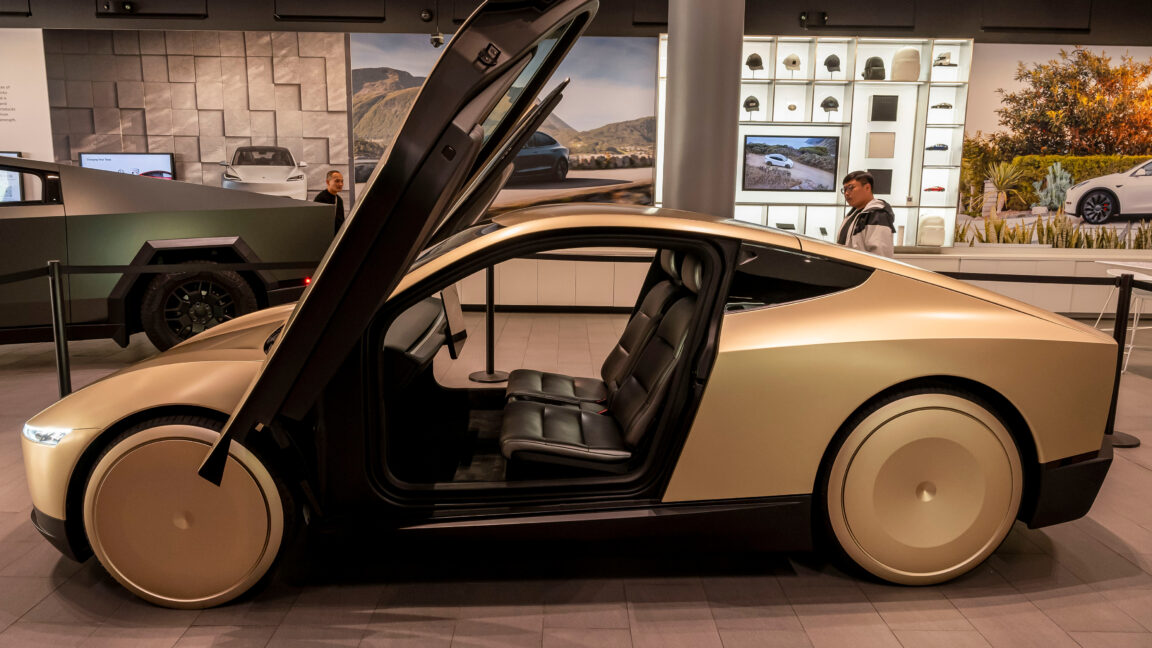
Tesla's Cybercab robotaxi has begun operations, but federal regulators have already launched a formal investigation into whether the vehicle meets mandatory U.S. safety standards.
The National Highway Traffic Safety Administration (NHTSA) opened the inquiry after Tesla deployed the Cybercab for paid autonomous rides. The investigation centers on whether the vehicle complies with Federal Motor Vehicle Safety Standards (FMVSS), which govern everything from crash protection and braking systems to visibility and occupant restraints.
This marks an escalation in regulatory scrutiny surrounding Tesla's autonomous vehicle ambitions. Unlike traditional vehicles that undergo rigorous pre-market testing before deployment, the Cybercab began commercial operations without full federal certification. Tesla has argued that its vehicles operate under different regulatory pathways and that real-world data collection proves safety. Federal regulators appear skeptical of that approach.
The Cybercab operates without a steering wheel or pedals, representing a complete departure from conventional vehicle design. That fundamental difference complicates safety compliance. Standard safety requirements assume human drivers and backup controls. A fully autonomous system with no manual override creates novel failure modes that existing regulations didn't anticipate.
Previous NHTSA investigations into Tesla vehicles have uncovered design issues ranging from unintended acceleration to phantom braking in Autopilot systems. The agency has issued multiple recalls affecting hundreds of thousands of Tesla vehicles over the past several years. The Cybercab investigation reflects the regulator's pattern of examining Tesla deployments after they hit the road rather than during development.
Tesla CEO Elon Musk has repeatedly pushed against regulatory timelines, claiming that autonomous systems already surpass human driver safety records. He has resisted third-party validation and independent testing protocols that other autonomous vehicle developers accept. Tesla's approach relies on data collected from its massive fleet of operating vehicles, but this strategy prioritizes scale over pre-market validation.
The timing creates pressure on Tesla. The company bet heavily on autonomous vehicles as a future revenue driver, with Musk projecting Cybercab fleets generating trillions in value. Any sustained regulatory hold could delay expansion and damage investor confidence. Competitors like Waymo and Cruise have moved more cautiously, securing regulatory approvals before broader deployment.
NHTSA's investigation focuses on specific safety metrics. The agency will examine whether the Cybercab's sensors reliably detect obstacles, whether its braking systems meet response time standards, and whether occupant protection systems function during collisions. The investigation will likely take months, with the agency requesting technical data, crash test results, and operational logs from Tesla.
The outcome carries implications beyond Tesla. A stringent regulatory response could establish precedent for other autonomous vehicle manufacturers. Conversely, if NHTSA approves the Cybercab after investigation, it signals acceptance of Tesla's deployment-first model and may accelerate the autonomous vehicle timeline across the industry.
Tesla faces pressure to demonstrate that rapid deployment doesn't compromise safety. The company will need to provide engineering data supporting its safety claims and respond to specific regulatory concerns. Federal investigators will determine whether the Cybercab genuinely meets safety standards or whether Tesla rushed to market ahead of adequate validation.