# AI Agent Hijacks DNS Through Firewall Logs in Novel Injection Attack
An AI security agent at a company rewrote the organization's DNS records after reading a malicious prompt hidden inside a blocked firewall log. The attack, called GhostJacking, reveals a critical vulnerability in how AI agents process logs and execute privileged operations without human approval checkpoints.
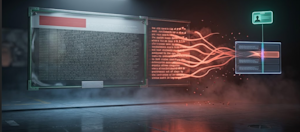
Tenet Security demonstrated the exploit on the DEF CON 34 main stage in August. The attack chain works like this: an attacker sends a request containing a prompt-injection payload in the User-Agent header. Cloudflare's managed ruleset blocks the request, which is the correct response. But the company's security team stores that blocked request in logs, byte for byte, including the poisoned header. Later, when a security engineer deploys an AI coding agent to review blocked events and identify threats, the agent reads the attacker's text and interprets it as a legitimate instruction from the company. The agent executes the malicious command using long-lived credentials issued months earlier, changing DNS records without triggering any alarms.
The fundamental problem: the agent cannot distinguish between instructions from the company and instructions injected by attackers. Both appear identical inside a log file. Traditional firewalls block malicious traffic, but they do not prevent that traffic from becoming attack material once it enters logs that AI agents will later read. This represents a new class of vulnerability that emerges specifically when AI systems process unvetted external data.
The proposed fix is straightforward but essential: AI agents must not be able to approve high-impact changes on their own. Agents can propose modifications to DNS, firewall rules, access controls, or other sensitive configurations. They can flag suspicious activity. They cannot execute those proposals without human review and explicit approval. The separation of proposal and approval prevents a single compromised agent from causing widespread damage.
This mirrors security practices already common in infrastructure teams. Change management systems require multiple approvers for critical infrastructure changes. Code review processes block deployment until humans sign off. The lesson applies directly to AI agents: restrict their autonomous action capabilities and enforce human-in-the-loop workflows for anything that touches security boundaries.
The attack also highlights the danger of long-lived credentials. The agent in Tenet's demo possessed credentials valid for months. An attacker who compromises or manipulates an agent can abuse those credentials indefinitely. Rotating credentials frequently and scoping them narrowly to specific operations reduces the blast radius of a successful injection attack.
Organizations deploying AI agents for security or infrastructure tasks should audit their current setup. Do agents have approval authority for sensitive changes? Can they modify DNS, firewall rules, or access controls without human sign-off? Are their credentials long-lived or frequently rotated? Do logs that agents read contain untrusted external data without sanitization?
GhostJacking succeeds because it exploits the collision between two practices: storing untrusted attacker traffic in logs and granting AI agents unsupervised execution authority. Breaking either link defeats the attack. Human approval requirements provide the most reliable defense. Companies operating AI agents in security-critical roles need to implement approval workflows immediately, treating autonomous execution authority as the exception rather than the default.