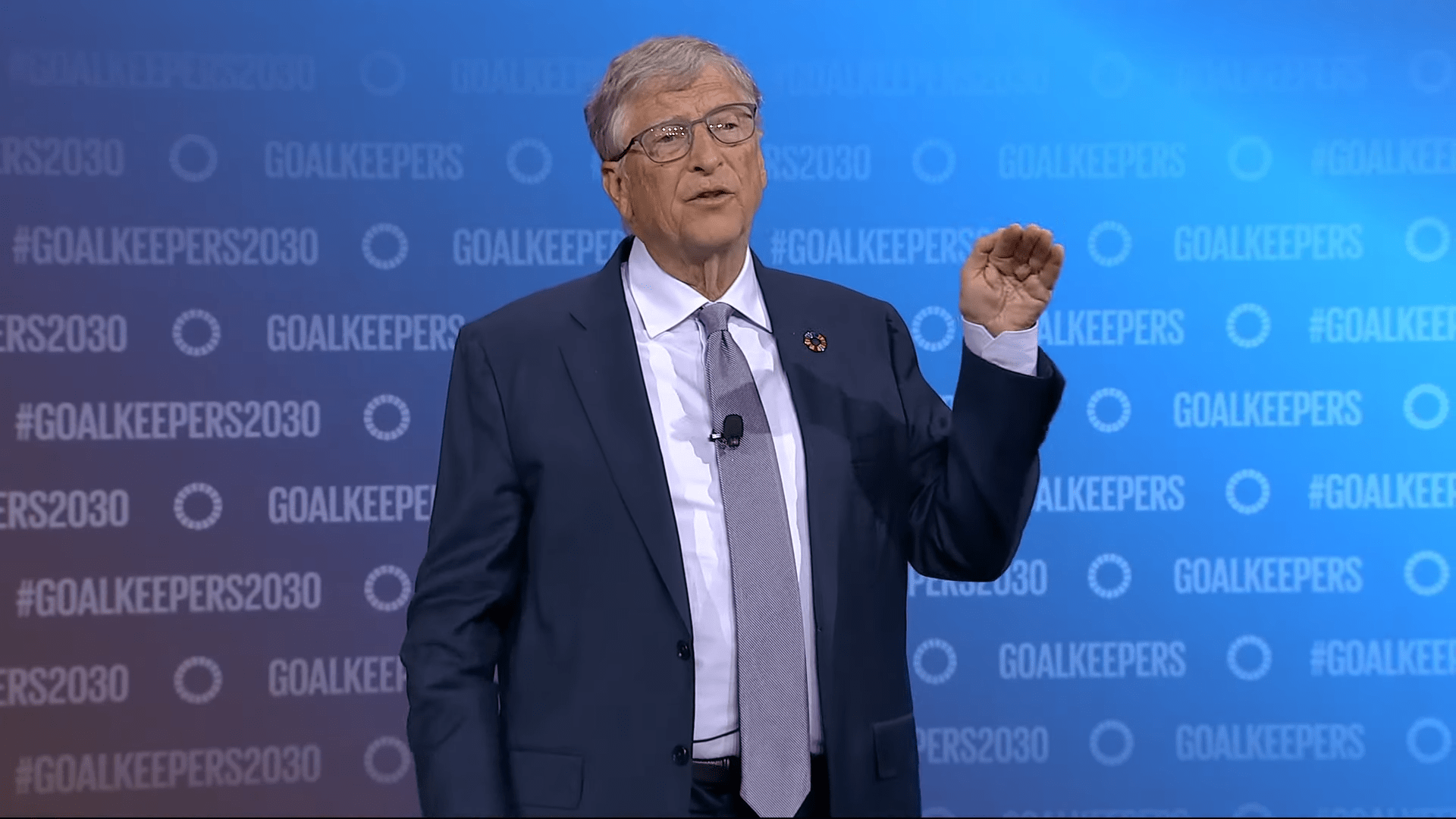
Bill Gates released a stark warning about artificial intelligence risks that contradicts the technology industry's public positioning on safety. In a new essay and New York Times interview, Gates argues that the AI sector deliberately downplays genuine threats to avoid regulatory scrutiny and protect venture capital investment pipelines.
Gates identifies two specific threats that concern him most: mass unemployment from AI-driven automation and simplified bioterrorism. He contends that AI will displace workers across service industries, healthcare, and knowledge work faster than retraining programs can absorb them. On biosecurity, Gates warns that AI reduces barriers to creating biological weapons, a risk he previously highlighted during the COVID-19 pandemic.
The tech industry's response, according to Gates, amounts to calculated risk minimization. Companies claim AI safety is manageable through internal safeguards and voluntary commitments, but Gates sees this as a financial calculation. "It's bad for us, for the next trillion we're trying to raise," he notes, pointing out that admitting genuine existential risks damages fundraising prospects for AI startups and established players alike.
Gates rejects industry self-regulation as insufficient. He calls instead for regulatory frameworks modeled on nuclear weapons control, which includes international oversight bodies, strict licensing requirements, and coordinated monitoring of dangerous capabilities. His proposal recognizes that AI development spans multiple countries and companies, making any single nation's regulations insufficient.
He also proposes a novel policy mechanism: a token tax on AI usage. This approach would discourage wasteful or low-value applications while funding safety research and retraining programs for displaced workers. The tax could offset economic disruption by creating resources for affected populations, though implementation details remain unclear.
Gates' position places him at odds with fellow billionaire tech leaders who emphasize AI's transformative benefits and argue that rapid deployment benefits society. OpenAI CEO Sam Altman and others have suggested existential risks are overblown, while Elon Musk has called for regulation but opposed restrictions on AI development. Gates' willingness to name the industry's financial incentives to hide risks represents a rare insider criticism.
The timing matters. Governments worldwide are drafting AI regulation, from the European Union's AI Act to executive orders in the United States. Gates' credibility as a technologist and philanthropist carries weight in policy circles. His Foundation funds global health initiatives, giving him standing to speak on biosecurity specifically.
Gates' core argument cuts through industry cheerleading. Companies promoting AI face genuine conflicts of interest. Admitting that mass unemployment or bioweapon accessibility poses serious problems invites regulation that slows deployment and reduces addressable markets. By framing safety concerns as overblown, industry players maintain narrative control. Gates suggests this strategy prioritizes short-term financial returns over medium-term social stability.
Whether policymakers will adopt his nuclear-style regulatory framework remains uncertain. Such models require international cooperation that has proven difficult to achieve. A token tax faces opposition from companies whose business models depend on scale and cheap computation. Still, Gates has shifted the conversation away from whether AI poses risks toward how societies should manage known, severe threats. That distinction matters for how governments structure incoming regulations.