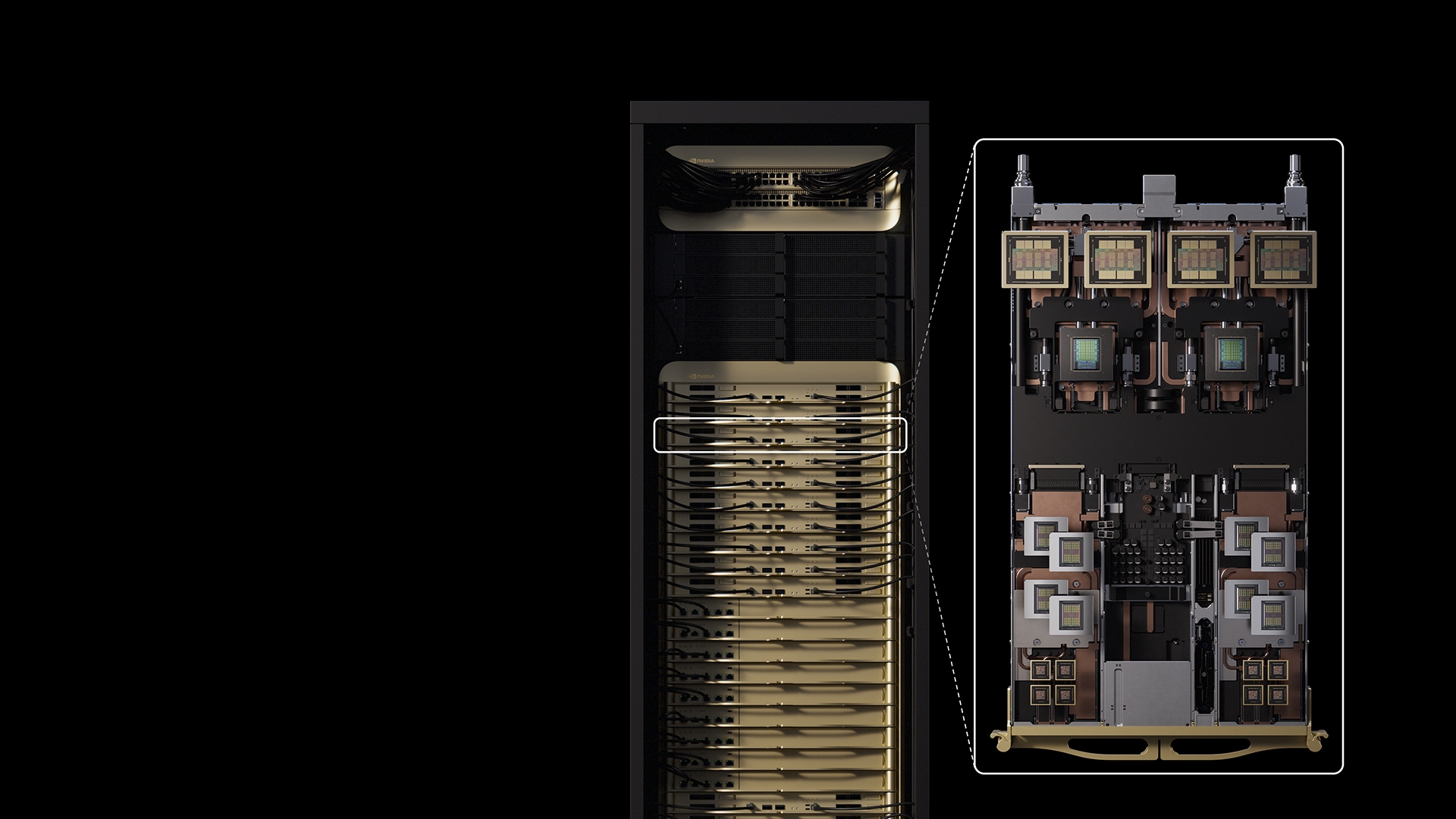
Nvidia is pushing its Groq 3 LPX inference chip into full production, claiming a four-fold speed advantage over rival Cerebras. The company reports generating 3,400 tokens per second when running Gemma 4 31B, a benchmark that positions the Groq 3 LPX as a leading inference accelerator. But the headline speed claim obscures critical architectural tradeoffs that shape real-world deployment costs and viability.
The performance disparity hinges on scale. Nvidia requires at least 64 Groq 3 LPX accelerators working in parallel to achieve that 3,400 token-per-second throughput. Cerebras reaches comparable performance with just one or two units. For operators running inference workloads, this difference translates directly into power consumption, cooling infrastructure, and capital expenditure. A single Cerebras chip eliminates the engineering overhead of coordinating 64 separate devices, managing inter-chip communication, and troubleshooting distributed system failures.
The Groq 3 LPX competes in the inference acceleration market alongside Cerebras, Graphcore, and custom silicon from cloud providers. Unlike training accelerators that benefit from well-established distributed computing frameworks, inference hardware must balance throughput against latency and system complexity. Cerebras has positioned itself as a single-chip solution that can handle inference without requiring massive cluster deployments. That architectural philosophy appeals to enterprises seeking simpler operational models and lower total cost of ownership.
Nvidia's strategy emphasizes raw token generation speed, which matters for batch inference scenarios where latency takes a back seat to overall throughput. Large language models powering search, document analysis, or content generation often process multiple requests simultaneously. In those cases, higher throughput per second across a cluster can justify the infrastructure cost. But for latency-sensitive applications like chatbots or real-time assistants, Cerebras' single-chip efficiency becomes more valuable.
The unresolved question concerns how Groq 3 LPX scales with mixture-of-experts models, which have become standard in frontier LLMs. MoE architectures activate different neural network pathways depending on input tokens, reducing compute per inference while increasing model size. Cerebras has published results on MoE inference, but Groq's scaling characteristics with expert models remain untested at production scale. If inter-accelerator communication becomes a bottleneck with MoE workloads, the cluster approach could suffer performance degradation that single-chip competitors avoid.
Nvidia's move into full production signals confidence in Groq 3 LPX adoption, likely driven by hyperscaler interest in distributed inference clusters. AWS, Google Cloud, and Azure have invested heavily in custom silicon partly to reduce dependence on Nvidia's GPU monopoly. An inference accelerator that requires 64-unit clusters may appeal to cloud operators with the infrastructure and demand volume to justify such deployments. Smaller enterprises or specialized inference services face higher economic friction.
The Groq 3 LPX represents a legitimate engineering achievement in inference acceleration. The speed metrics are real, not marketing fiction. But Nvidia's four-times-faster claim functions more as a partial truth shaped by favorable benchmark conditions. Cerebras and other single-chip designs trade some peak throughput for operational simplicity and better scaling efficiency in constrained deployment scenarios. The actual competitive winner depends on customer infrastructure, workload patterns, and whether MoE inference performance bears out the theoretical advantages of single-chip approaches.