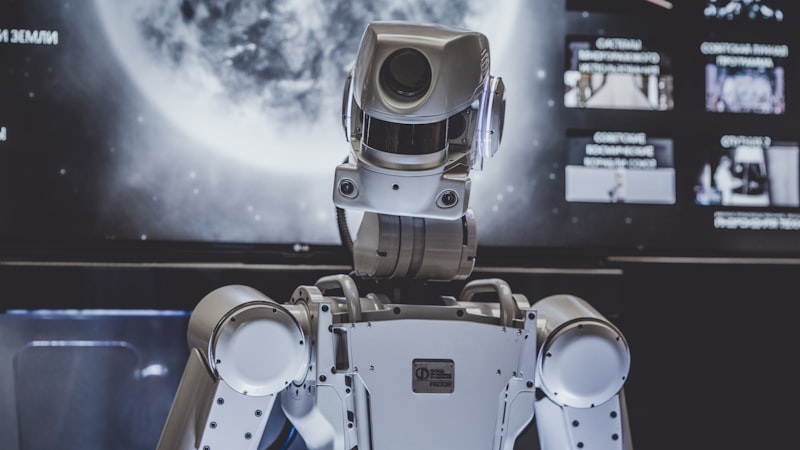
The robotics sector is consolidating into a public-market race that mirrors AI's venture-to-IPO acceleration, with three humanoid manufacturers crossing financing thresholds in a single week. This convergence signals that the industry has moved beyond speculative hardware startups into capital-intensive manufacturing that demands institutional backing.
Agility Robotics filed for a public listing through a SPAC merger valued at $2.5 billion, bringing its Digit humanoid toward mass production. Unitree cleared its Shanghai IPO this week, validating the Chinese robotics market's appetite for autonomous systems. Tesla simultaneously began converting its legacy Model S manufacturing line in California into an Optimus factory, committing existing infrastructure to humanoid production at scale. These three moves within days compress what typically spans years into a compressed timeline, suggesting investor confidence has shifted from skepticism to commodity-level deployment expectations.
The technical picture remains uneven. Mistral released a robot controller that performs navigation using single-camera visual input, reducing the sensor overhead that has historically constrained mobile robot economics. This work exemplifies a narrowing focus on specific capability gaps rather than broad general-purpose robotics. Yet research findings this week exposed a persistent weakness: locomotion tasks have stabilized through iterative refinement, but the underlying language and world models used to command robots degrade rapidly when fine-tuned for physical action. Models trained to control robotic limbs lose semantic understanding of objects, spatial relationships, and task objectives they previously handled correctly.
This gap matters operationally. A robot that walks smoothly but cannot understand "place the box on the shelf" remains a novelty. Training stability research shows that catastrophic forgetting occurs when roboticists adapt large language models for embodied control, forcing teams to choose between general knowledge and physical competence. Current architectures do not simultaneously preserve both.
The financing surge outpaces technical maturity. Agility, Unitree, and Tesla are racing toward production at scales that assume solved navigation and manipulation. IPO timelines run quarterly; robotics problems operate on longer cycles. Agility's $2.5 billion valuation embeds expectations for profitability and unit economics that require solved problems, not research breakthroughs. Tesla's factory conversion stakes existing production capacity on Optimus viability.
This mismatch does not kill the sector. It shapes it. Companies will deploy robots for narrow, well-defined tasks: warehouse picking, delivery in controlled environments, manufacturing-line repetition. These domains require reliable locomotion and narrow perception, not general world knowledge. The research showing model degradation under robotics fine-tuning applies most to generalist robot aspirations. Specialists will move faster.
Capital allocation follows this logic. Unitree and Agility file for public markets by proving they can build and sell thousands of units for specific applications. Tesla's move signals confidence that Optimus can drive Tesla's own manufacturing costs down. None of these bets require solved artificial general intelligence or even particularly intelligent robots. They require reliable, repeatable, cheaper-than-human alternatives for repetitive labor.
The money flows to execution. The technical challenges remain research problems nested inside product roadmaps. Investors accept this split because humanoid hardware has achieved enough functional stability that deployment economics matter more than breakthrough capability.