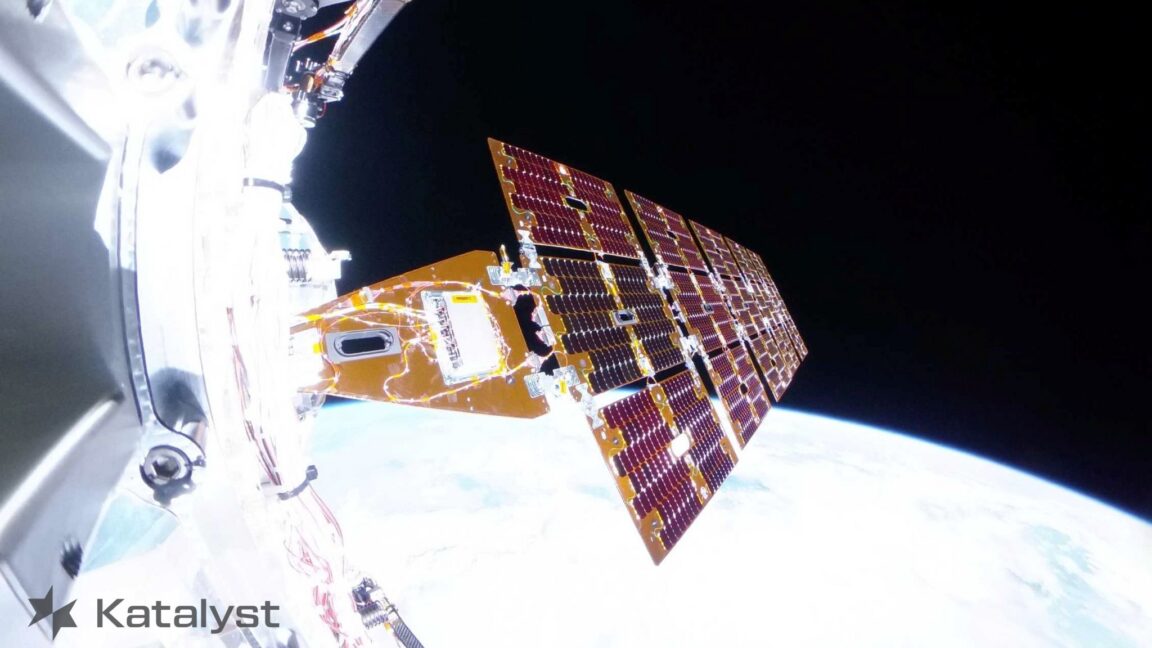
NASA has canceled plans to rescue the Swift Gamma-Ray Burst Observatory, allowing the spacecraft to reenter Earth's atmosphere later this year. The decision ends a years-long effort to extend the mission through a servicing flight.
Swift launched in 2004 and has detected thousands of gamma-ray bursts, the most violent explosions in the universe. The spacecraft operates in low Earth orbit at roughly 600 kilometers altitude. Without active reboost maneuvers, orbital decay is inevitable.
The mission faced a critical moment when reaction wheel failures degraded its ability to orient itself and track targets. NASA initially explored a robotic servicing mission using commercial spacecraft, but technical and budgetary constraints made rescue impractical. The agency determined that attempting retrieval or servicing would consume resources better directed toward other priorities.
Swift's instruments revolutionized gamma-ray astronomy. The spacecraft can detect bursts within seconds and alert ground observatories, enabling rapid multiwavelength follow-up observations. This capability produced breakthroughs in understanding neutron star mergers, black hole behavior, and the universe's most extreme physics.
The observatory's extended mission already exceeded expectations. Originally planned for a two-year duration, Swift operated for two decades, far outlasting its design life. Recent data showed degradation but continued scientific value, prompting NASA to explore rescue options.
Reentry will occur over the coming months as atmospheric drag gradually lowers the orbit. NASA expects most of the spacecraft to burn up during atmospheric reentry, with any surviving debris posing minimal risk to populated areas.
The cancellation reflects hard choices in space exploration funding. Swift contributed immensely to high-energy astrophysics, but aging infrastructure eventually reaches retirement. Future gamma-ray observatories like the proposed Compton Gamma Ray Observatory 2 may eventually assume Swift's scientific role, but capabilities will overlap with existing missions until