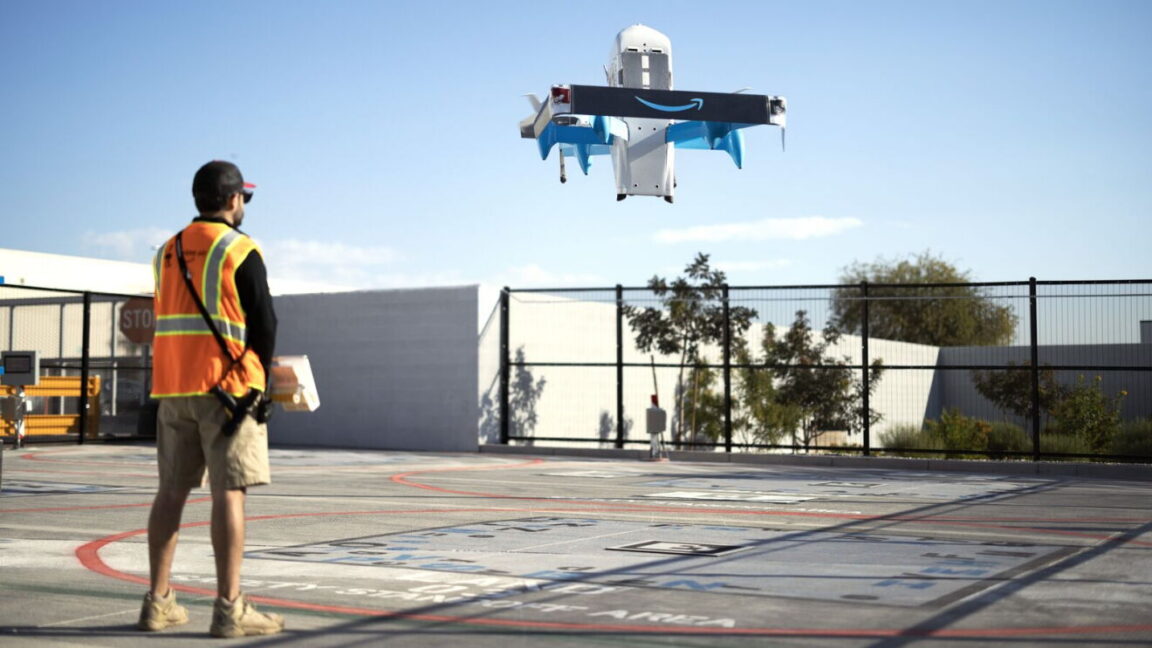
Amazon plans to expand its Prime Air delivery drone service to 500 US neighborhoods by the end of 2026. The company currently operates in a limited number of locations and has faced regulatory hurdles in scaling the service. Expanding to 500 neighborhoods would represent a major leap in drone delivery infrastructure.
The expansion comes as Amazon pushes to integrate autonomous delivery into its logistics network. Prime Air has conducted trial operations in select areas, proving technical viability for residential package delivery. FAA approval remains essential for broader deployment, as federal regulations govern airspace usage and safety standards.
Residents in targeted neighborhoods face real tradeoffs. Faster delivery times appeal to consumers, but concerns persist about noise, privacy, and airspace safety. Delivery drones operating over residential areas raise questions about emergency protocols, liability in case of accidents, and visual surveillance through flight paths.
Amazon's timeline reflects confidence in both technology maturity and regulatory momentum. The company has invested heavily in drone infrastructure and received FAA waivers for expanded operations in recent years. Competing services like Alphabet's Wing and other startups are also scaling operations, creating competitive pressure to expand quickly.
Technical challenges remain. Weather limitations, battery capacity, and package weight restrictions constrain when and where drones can operate effectively. Urban airspace management presents another obstacle as drone traffic increases.
The 500-neighborhood goal signals Amazon's commitment to autonomous delivery as a core business strategy. Success would position Prime Air as a major logistics differentiator against competitors. However, execution depends on sustained FAA cooperation, public acceptance, and solving real operational bottlenecks beyond regulatory approval.
Amazon's expansion plans suggest delivery drones transition from experimental to mainstream within two years, reshaping last-mile logistics for a significant portion of US consumers.