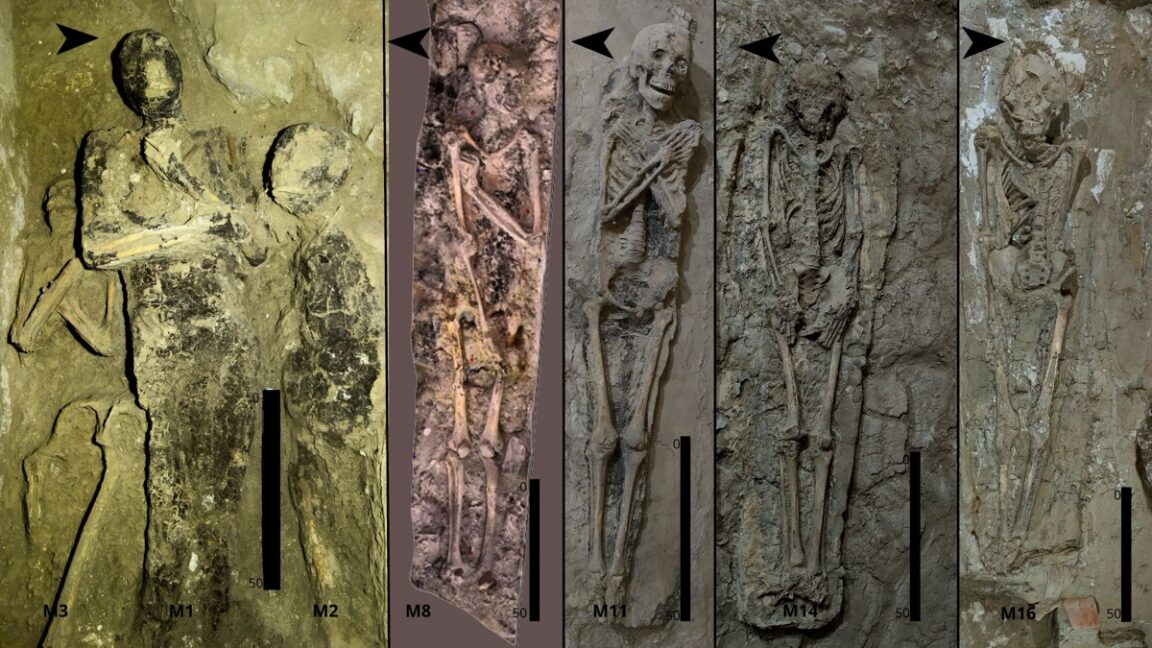
Excavations at a Theban tomb have uncovered evidence of how Egyptian burial practices transformed across centuries. Researchers documented a clear shift from individual coffin burials to the systematic reuse of tombs for mummy interments during later periods.
The tomb, located in Thebes (modern-day Luxor), contained multiple layers of burials spanning different dynasties. Early occupants were placed in individual coffins within designated chambers. Over time, tomb operators abandoned this approach in favor of stacking multiple mummies in the same spaces, maximizing use of burial infrastructure.
This evolution reflects changing attitudes toward death and the afterlife in ancient Egypt. Individual burials with personalized coffins required significant resources and space. The shift toward mummy stacking emerged as populations grew and tomb space became premium real estate. Rather than constructing new tombs, families reused existing ones, sometimes disturbing earlier burials in the process.
The archaeological record shows this wasn't random disturbance. Tomb workers deliberately removed older remains to make room for new mummies, suggesting organized reuse protocols. Some earlier coffins were even repurposed as containers for later burials, showing resourceful recycling of materials.
This pattern illuminated broader economic and social changes in ancient Egypt. The practice of mummy reinterment became especially common during the Third Intermediate Period, when centralized authority weakened and tomb building declined. Communities adapted by maximizing existing burial sites rather than investing in new construction.
The Theban tombs offer rare continuity data. Most archaeological sites provide snapshots of single time periods. These multi-layered sites capture centuries of changing practices in one location, allowing researchers to track cultural evolution without jumping between excavation sites.
Understanding these burial transitions helps historians reconstruct daily life, death management, and resource allocation in ancient Egypt. The tombs function as archives of practical problem-solving, revealing how societies adapted infrastructure