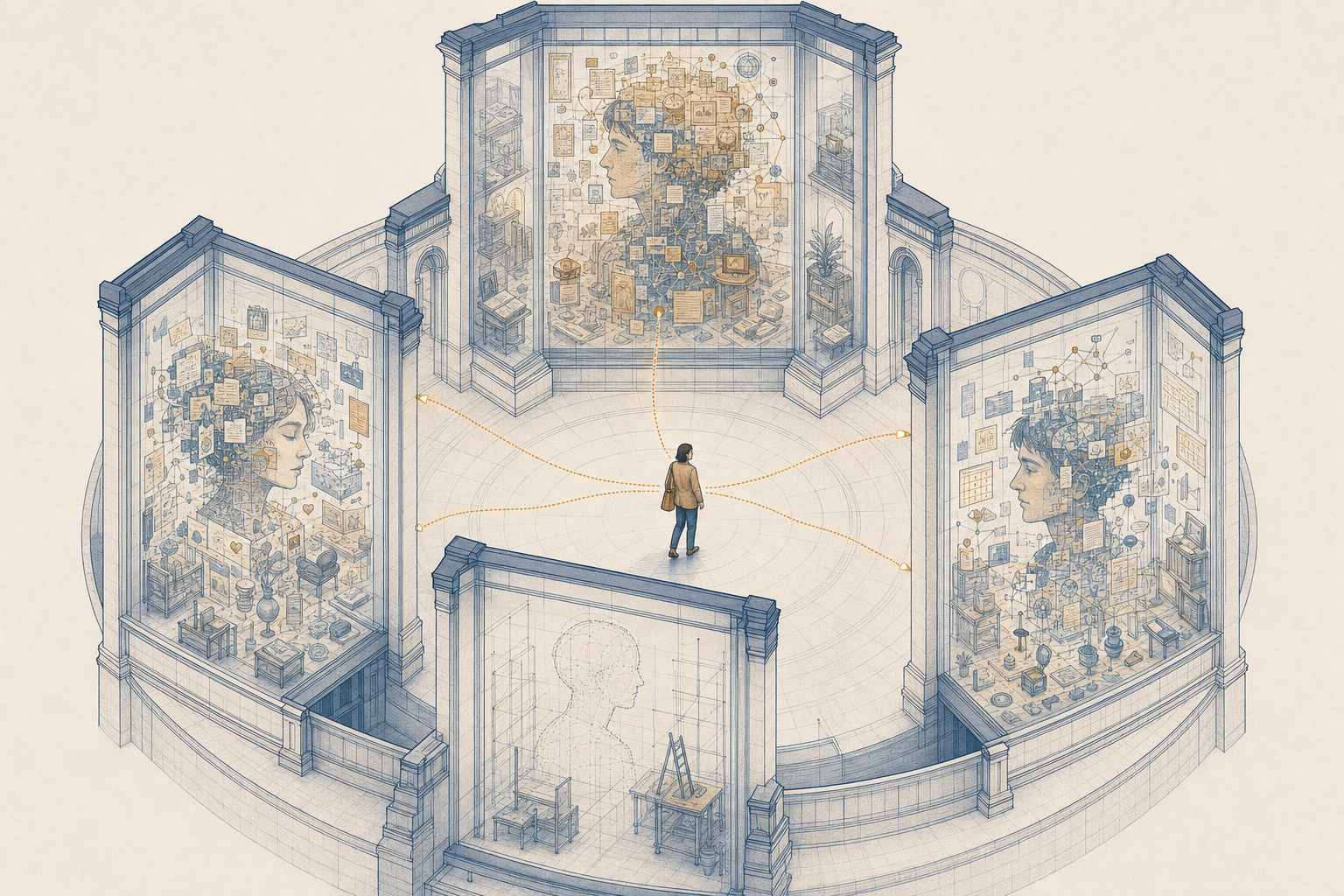
AI assistants are accumulating personal models of users across platforms, but these profiles remain fragmented and inaccessible. Claude learns your writing preferences. ChatGPT tracks your projects. Anthropic's Claude, OpenAI's ChatGPT, and other agents build distinct understandings of individual users through interaction patterns, yet users have no unified way to access, review, or control these distributed representations.
The core problem: context about you exists everywhere except where you control it. Each platform maintains its own model in isolation. You cannot export your preferences from Claude to use with another service. You cannot see what ChatGPT has learned about your work habits. You cannot decide which aspects of your profile you want to share or delete.
This mirrors historical patterns in personal data. Just as individuals gained rights to access credit reports and medical records, the emergence of AI-driven user profiling demands new infrastructure. A personal context repository, controlled by the user rather than platforms, could solve this. Such a system would let users maintain a single, authoritative source of their own information. They could grant specific agents access to relevant context without exposing everything. They could update their preferences once and sync across tools.
The business incentive exists too. AI companies currently spend compute power re-learning what they already know about users. A standard way to exchange context would let systems operate more efficiently. Companies could focus on novel capabilities rather than rebuilding foundational user models.
Several approaches could work. A personal data store that users host themselves. An open standard for context exchange, similar to OAuth but for preferences and history. A decentralized system where users control cryptographic keys to their own profiles. Each has tradeoffs around privacy, convenience, and technical complexity.
Without intervention, the trajectory continues: more fragmentation, more redundant learning, more data locked behind corporate walls. The question isn't whether systems will model you. They will. The