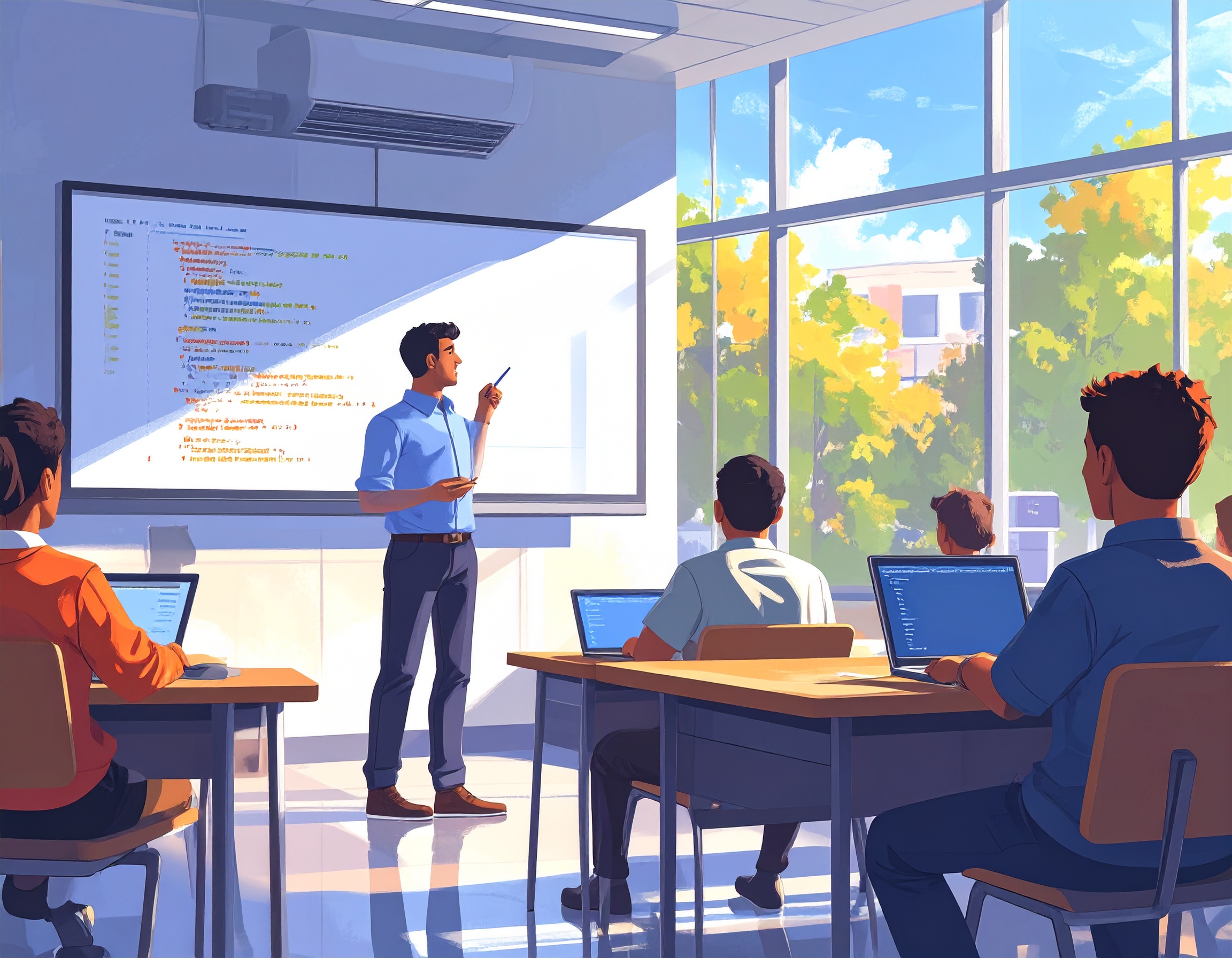
Computer science educators face a fundamental shift as large language models automate code generation. Students can now ask AI to write working solutions instantly, eliminating the traditional feedback loop that teachers relied on to assess understanding.
The core problem runs deep. Instructors historically evaluated student code to diagnose misconceptions, track problem-solving approaches, and identify where learners struggled. A student's messy first attempt at a loop or their choice of data structure revealed their mental model. That diagnostic window closes when GPT or similar tools produce polished, correct code on demand.
This doesn't mean teaching coding becomes obsolete. Instead, pedagogy must shift focus. Some educators now emphasize conceptual understanding over syntax. They ask students to explain *why* they chose an algorithm rather than implement it flawlessly. Others require students to debug existing code, modify solutions, or work on problems where AI output serves as a starting point for refinement rather than a final answer.
The challenge spreads beyond individual classrooms. Bootcamps and university programs built their reputation on producing job-ready developers who could write functional code. That credential weakens when employers know candidates used LLMs to complete projects. Some institutions now use proctored environments that restrict tool access during assessments. Others embrace the reality and teach students to use AI effectively, treating prompting and code review as core skills.
Real stakes exist. Students who outsource thinking to AI may develop weaker problem-solving intuition. They risk not learning fundamental patterns that generalize across languages and frameworks. Yet banning tools feels futile when the professional world already uses them routinely.
Forward-thinking programs are experimenting with hybrid models. Assignments might require AI-generated code plus documented reasoning. Exams test conceptual knowledge rather than syntax recall. Project-based work lets AI handle routine parts while students focus on architecture, testing, and user-facing decisions.
The shift echoes past