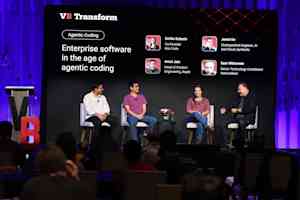
AI coding agents are reshaping how development teams work, but the cost is becoming a serious concern. At Kilo Code, engineers now spend just 1% of their time reading or writing code themselves, with AI agents handling the rest. This dramatic shift raises hard questions about budget management, error handling, and whether token consumption reflects genuine productivity gains or wasted infrastructure spend.
Replit, Kilo Code, and Symbotic are grappling with the operational realities of deploying agentic AI at scale. The core challenge is not novelty but practicality. Teams must decide which systems are safe to fully automate, establish clear ownership when models make mistakes, and support environments running multiple model architectures simultaneously. Token costs balloon quickly when agents make decisions autonomously, and nobody wants to discover that last month's spike was caused by poorly-configured retry loops.
Emilie Schario, Kilo Code's co-founder, frames this as natural evolution. "Unless something's really broken or debugging, 99% of the time engineers are not reading or writing code anymore," she said. That efficiency gains real value, but only if companies track what agents actually accomplish versus what they merely consume in compute.
The tension is real. Skyrocketing token bills can mask inefficiency. An agent that generates ten times more code than humans but requires human review on half of it is not necessarily a win. Teams are learning to set hard limits on agent autonomy, implement staged approval workflows, and monitor cost-per-completed-task rather than raw token counts.
What separates winners from budget bleeders is discipline. The companies managing this well treat agentic AI like any other infrastructure expense. They measure output quality, establish clear failure domains where agents operate unsupervised, and pull the plug on configurations that burn tokens without delivering results. The 1% metric from Kilo Code looks impressive until