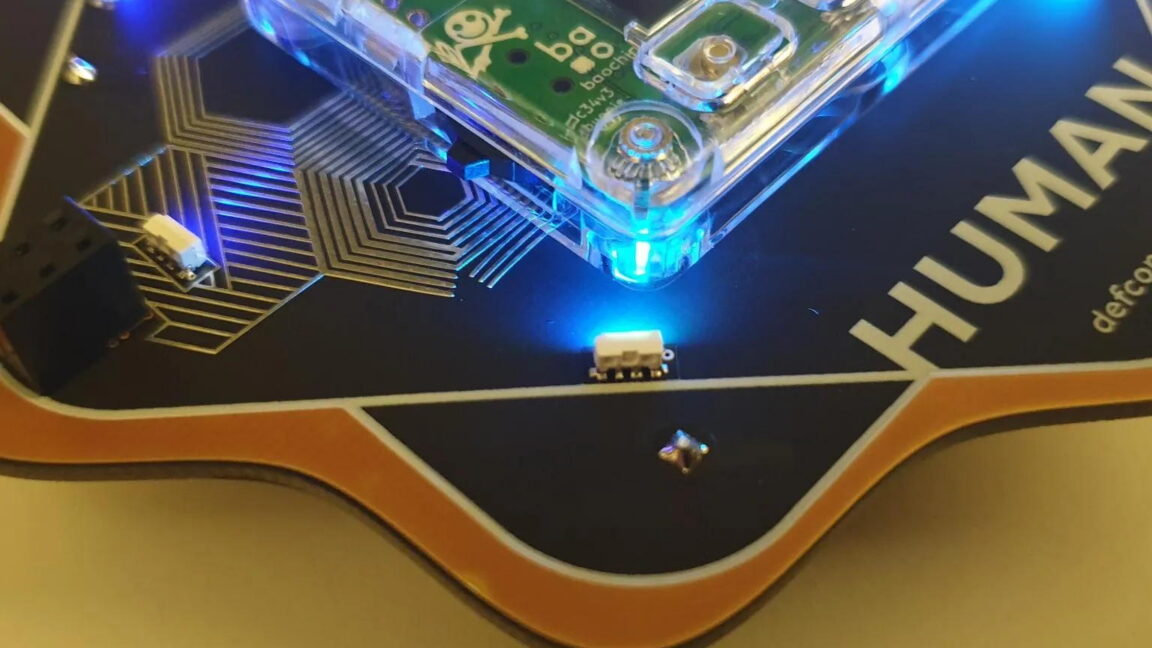
Defcon organizers have released a badge for this year's conference that functions as a visible security key, allowing attendees to inspect the hardware while keeping the device functional after the event ends.
The badge features a removable chip design that hackers can examine and analyze without compromising its ability to work as an authentication device. This approach balances transparency with practical utility, letting security researchers study the internals while maintaining usability.
Traditional conference badges often serve as one-time tokens or proprietary black boxes that lose functionality post-event. Defcon's design inverts this model. The removable chip enables attendees to inspect circuitry, reverse-engineer components, and document their findings. The badge continues operating as a security key even after the conference concludes, giving participants a functional takeaway rather than a collectible paperweight.
The decision reflects hacker culture's emphasis on openness and learning. By making internals visible and accessible, organizers encourage hands-on exploration and knowledge sharing. This aligns with Defcon's ethos of fostering technical skill development and creative problem-solving within the security community.
The removable nature also addresses practical concerns. Attendees can disconnect the chip for extended examination without destroying the badge, then reattach it for continued use. This modularity transforms the badge from a disposable conference item into an educational tool with lasting value.
Security key functionality persists throughout, allowing the badge to authenticate users on supported platforms even months after Defcon concludes. The design essentially gives every attendee a take-home lab specimen combined with a working security device.
This approach differs sharply from enterprise conference badges, which typically operate as locked proprietary systems. Defcon's transparent, modular design prioritizes participant agency and technical curiosity over corporate control. The visible internals invite tinkering, study, and community discussion about the hardware itself.
For a conference centered on h