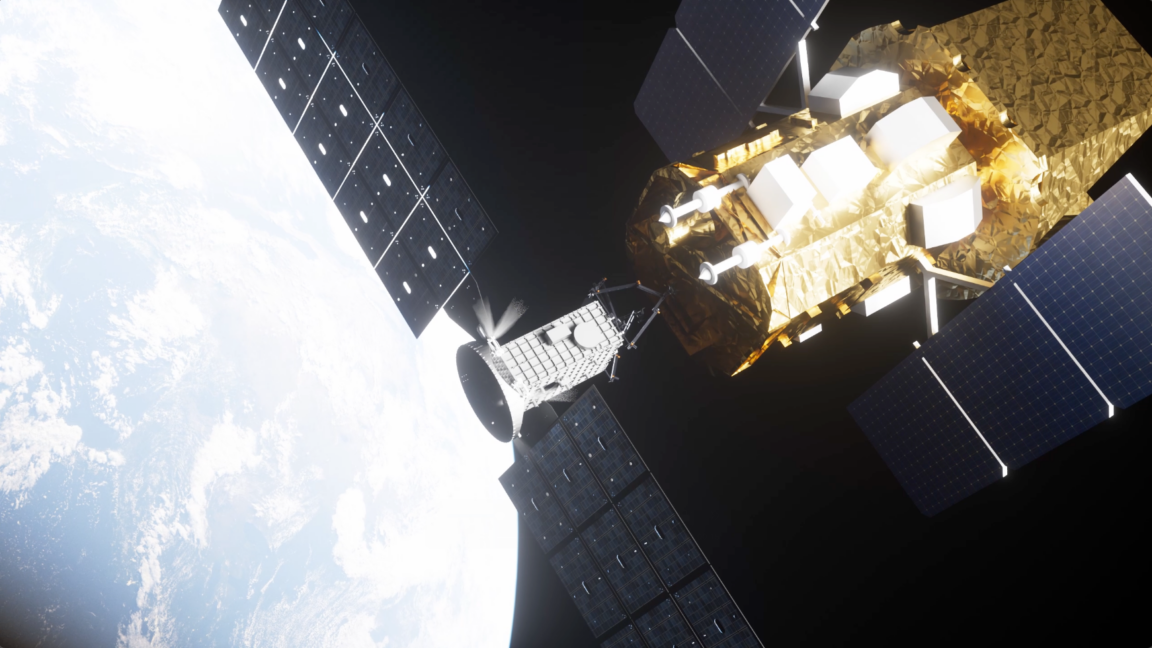
NASA's Swift gamma-ray burst observatory faces a critical problem. The satellite's attitude control system has degraded, leaving it unable to point its instruments accurately at cosmic events. Without intervention, Swift risks becoming a drifting piece of dead weight in orbit.
Engineers at NASA and commercial partners are developing an ambitious solution. They plan to send a robotic spacecraft to rendezvous with Swift, grapple with the aging satellite, and either repair it or guide it to a safe deorbit. The operation echoes recent successful on-orbit servicing missions, though Swift presents unique challenges due to its age and design.
Swift launched in 2004 and has spent two decades detecting gamma-ray bursts—violent explosions marking the formation of black holes. Its rapid-response capability made it invaluable for astrophysics. But age and solar radiation damage have worn the satellite's thrusters and control systems. Current attitude control leaves Swift drifting, unable to maintain precision pointing.
The capture operation would require precise navigation and berthing procedures. A servicing spacecraft would need to approach safely, establish a stable connection, and execute repairs without damaging the vulnerable instrument package. The work mirrors operations conducted on Hubble and international space station components, but Swift's smaller size and different design present novel problems.
Cost and timeline remain uncertain. NASA has not announced which contractor will lead the rescue, though companies with servicing experience like Northrop Grumman and Axiom Space have expressed interest. The agency must balance Swift's scientific value against development expenses.
Success hinges on whether engineers can design a compatible capture mechanism and validate procedures before Swift degrades further. Failure means losing a proven asset that continues detecting gravitational wave counterparts and studying high-energy phenomena. For a mission that has already exceeded its original seven-year lifespan by more than a decade, a robotic rescue could extend its service life