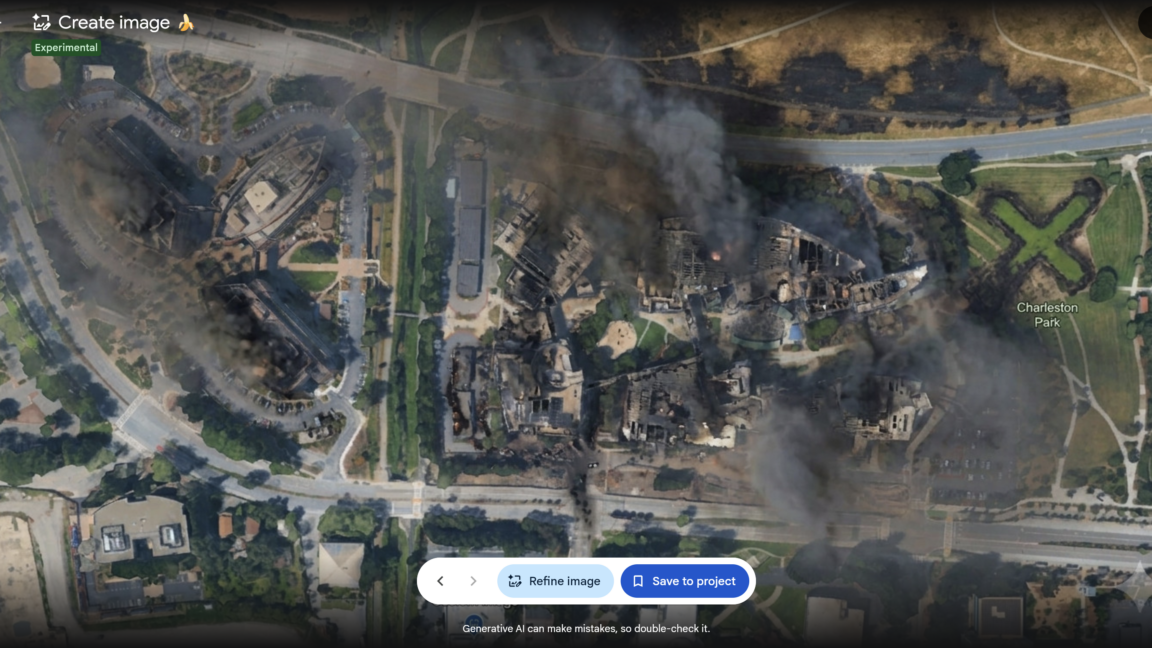
Google retracted an AI tool that generated synthetic satellite imagery after pushback over misinformation risks. The company had announced the feature during its Google I/O developer conference, positioning it as a way to fill gaps in satellite coverage for areas with persistent cloud cover or limited imagery.
The tool used generative AI to create plausible-looking satellite pictures where real data didn't exist. Google framed this as helpful for researchers, urban planners, and humanitarian workers who needed complete geographic data. The system trained on real satellite imagery to predict what terrain might look like beneath clouds or in areas with sparse coverage history.
Critics flagged an obvious problem: fake satellite images could spread as authentic ones. Misinformation researchers and journalists raised alarms about the potential for manipulated imagery to deceive people about environmental conditions, urban development, or disaster impact. A doctored satellite photo could fuel false claims about deforestation, flooding, or infrastructure damage.
Google acknowledged the concern and pulled the feature from public release. The company stated it would reconsider the tool's deployment and work on additional safeguards before bringing it back, if at all.
This reflects a broader tension in AI development. Generative tools excel at filling data gaps and automating repetitive tasks. They also excel at creating convincing falsehoods. Companies often move fast on capability rollouts, only to retreat when the risks become public.
The satellite imagery case differs from other generative AI applications because satellite data carries inherent authority. People trust satellite pictures as ground truth about the physical world. Synthetic imagery blurs that line in ways hard to reverse once images circulate online.
Google's retreat suggests the company recognized that releasing this tool without strong verification systems would invite exactly the kind of misinformation nightmare it's designed to solve. The decision leaves open questions about whether this feature can exist safely with proper safeguards, or whether the risks simply outweigh the benefits