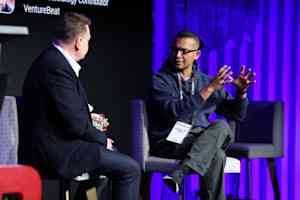
Instacart's CTO Anirban Kundu argues that artificial intelligence should handle the repetitive, high-volume work engineers currently spend time on, freeing humans to tackle problems requiring judgment and creative thinking.
Speaking at VB Transform 2026, Kundu stated that developer teams waste effort on draining tactical tasks that machines can absorb more efficiently. This shift has already changed how Instacart's engineers work. In 97% of cases, developers no longer read the code AI generates. Instead of writing code line by line, engineers now focus on directing AI systems to produce what they need.
"In the past, the tactical level was the creation of the code," Kundu said. "In the most tactical level going forward, it's going to be, 'How do you navigate around the AI system to give you what you want?'"
This philosophy extends to tech debt, a persistent problem in software development where shortcuts taken early create maintenance burdens later. Kundu suggests AI tools eliminate much of the incentive to accumulate debt in the first place by handling the monotonous cleanup work that typically falls to engineers.
The approach inverts traditional software development. Rather than developers writing instructions that machines execute, developers now specify outcomes while AI determines implementation. This requires a different skill set: the ability to prompt and iterate with AI systems rather than write precise code syntax.
Instacart's experience suggests the transition is already underway at companies with resources to deploy advanced AI tooling. The company claims productivity gains from this model, though Kundu's statement about engineers not reading code in 97% of cases raises questions about oversight and debugging when AI-generated code fails or behaves unexpectedly.
The shift reflects broader industry movement toward AI-assisted development. Whether this model proves sustainable depends on whether AI systems can reliably handle edge cases and complex logic without human code review. Kun