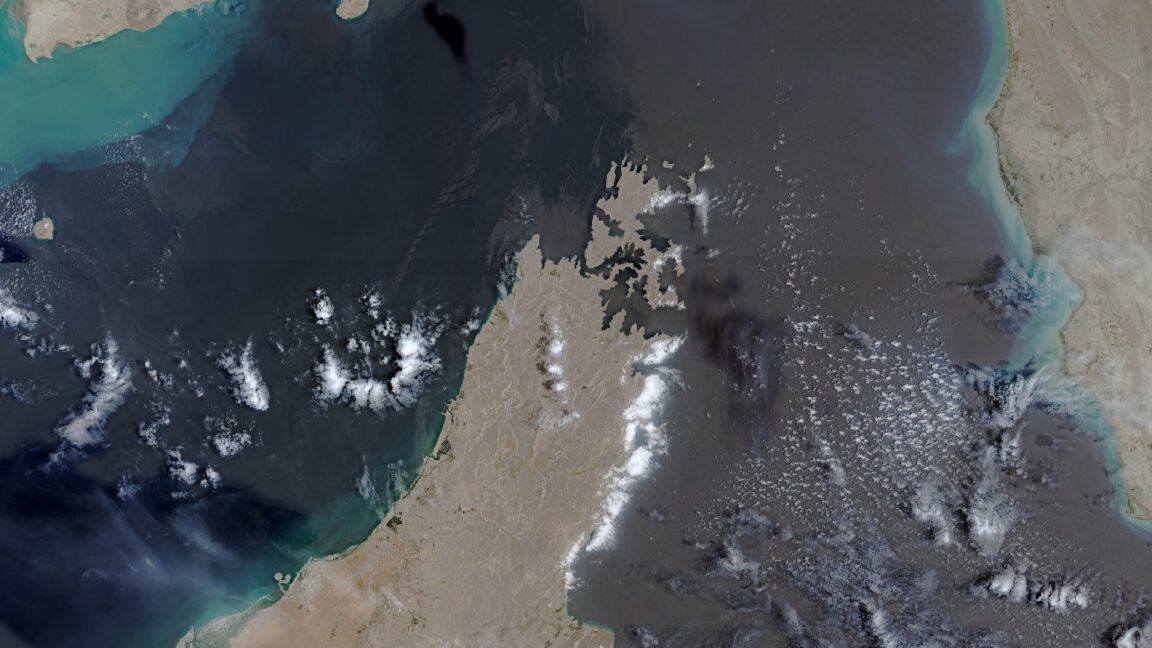
The European Union approved a US request to restrict public access to satellite imagery from the Copernicus program covering Iran and surrounding regions. The move blocks civilians and researchers from viewing high-resolution Earth observation data of an area that includes active military operations.
Copernicus, the EU's flagship Earth observation system, normally provides free, publicly available satellite imagery to anyone worldwide. The restriction represents a departure from the program's open-access mandate. The US justified the request by citing national security concerns tied to escalating tensions with Iran.
This marks the second delay imposed on Copernicus imagery of the region. The timing coincides with renewed military activity between the US and Iran, following a cycle of strikes and counter-strikes that accelerated recently. American officials argued that releasing detailed satellite photos could compromise military operations or reveal sensitive intelligence capabilities.
The decision creates a precedent for restricting Copernicus data based on geopolitical conflict. The satellite constellation produces imagery with resolution down to 10 meters, detailed enough to identify military installations, troop movements, and defensive positions. Researchers studying conflict, climate impacts on disputed regions, or humanitarian conditions now face barriers to accessing this data.
Environmental scientists and conflict monitors have relied on Copernicus imagery for independent verification of events on the ground. Restrictions limit transparency and external fact-checking of military claims. Other nations could use the precedent to request similar blocks on sensitive regions, fragmenting what was intended as a unified global observation system.
The EU's compliance with the US request reflects geopolitical alignment but raises questions about the future of publicly funded Earth observation as a common resource. Whether these restrictions become permanent or lift when tensions ease remains unclear. The decision signals that even Europe's commitment to open scientific data can yield to security pressures.