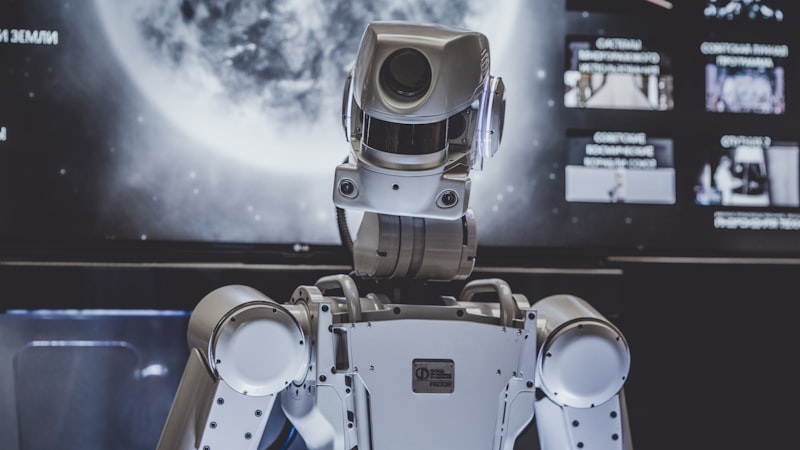
Robotics entered a pivotal week with three humanoid makers racing toward public markets. Agility filed for a $2.5 billion SPAC merger, Unitree completed its Shanghai IPO listing, and Tesla converted its former Model S production line into an Optimus factory. The capital momentum reflects investor conviction that humanoid robots are nearing commercial viability.
Technical progress remains uneven. Mistral released a robot control system that navigates using only a single inexpensive camera, showing how constraint drives efficiency. Yet research revealed a persistent problem: models trained to act lose foundational world knowledge. Locomotion algorithms are maturing rapidly, but the reasoning systems that should accompany physical capability remain unstable during task-specific training.
The divergence between funding pace and technical readiness matters. Money flows toward humanoid companies faster than those companies solve core challenges around robot reasoning and generalization. Agility, Unitree, and Tesla all face the same bottleneck: robots that walk smoothly but understand their environment inconsistently will underperform in unstructured real-world settings.
Tesla's factory conversion carries particular weight. Retooling an entire production line signals Optimus isn't a research project anymore but a manufacturing commitment. That doesn't guarantee the technology is ready, only that Tesla believes scaling production will help close the remaining gaps.
The research direction suggests the real bottleneck isn't locomotion or sensing but knowledge retention during fine-tuning. When robotics researchers train models for specific tasks, the systems often forget spatial reasoning, object permanence, and cause-effect relationships learned during pretraining. Solving this would unlock robots that can navigate, manipulate, and adapt without constant retraining.
This week confirmed robotics has entered a capital-intensive phase. Three IPO-track companies mean public investors will soon scrutinize whether hardware startups can turn research momentum