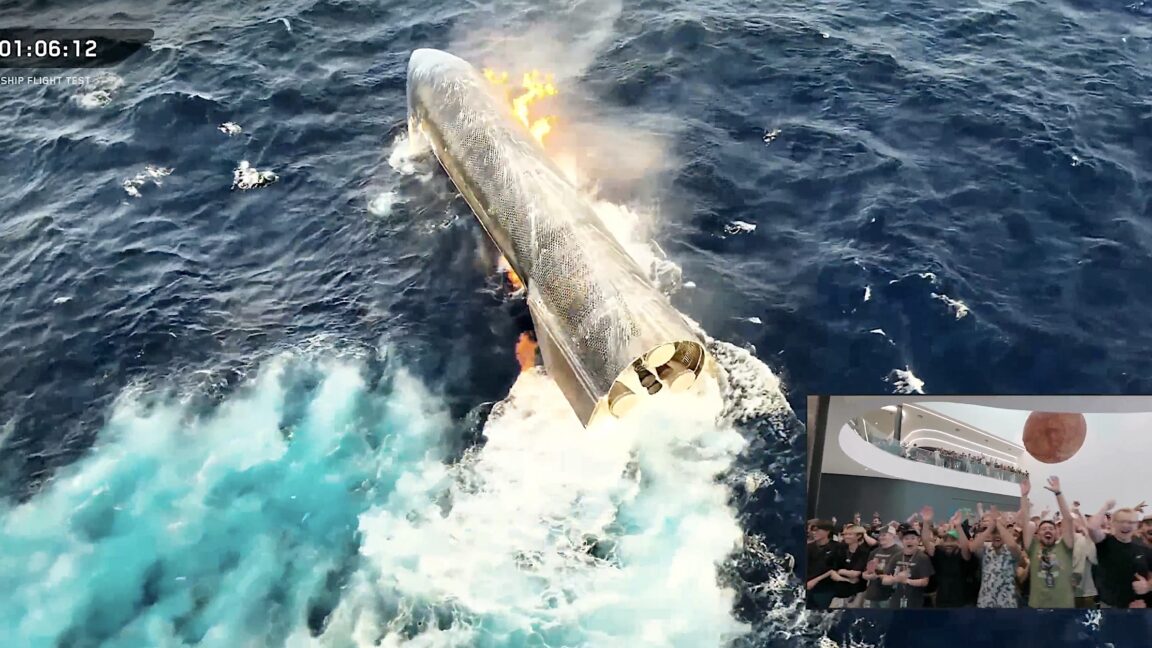
SpaceX plans to catch Starship with its launch tower on the next flight after the vehicle's 13th test demonstrated sufficient progress toward full recovery operations.
The company has been developing "chopstick" arms on its Super Heavy booster catch tower to grab the descending rocket rather than rely on traditional landing legs. This approach offers significant advantages. A tower catch saves time and simplifies reflight preparation by eliminating the need to recover the booster from a landing pad, then transport it back to the launch site.
The 13th Starship flight provided the data SpaceX needed to commit to the next catch attempt. The booster executed its burn sequence properly and descended toward the capture zone with sufficient precision. While exact details remain limited, the test validated key systems SpaceX engineers monitor before attempting a catch.
This represents a maturation of SpaceX's recovery strategy. Early Starship test flights focused on basic objectives like engine performance and staging separation. By Flight 13, the company had moved into the domain of precision return dynamics. The tower catch system requires the booster to arrive at an exact altitude and position, traveling at the right velocity for the mechanical arms to secure it safely.
Catching the booster at the tower also reduces operational complexity. Traditional landing legs require deployment, inspection, and potential repair. The tower catch, by contrast, positions the booster directly over the launch pad where ground crews can immediately begin refurbishment. This shortens the turnaround time between flights, a priority for SpaceX's rapid iteration development cycle.
The next flight will test whether SpaceX can execute a catch reliably. Success would mark another milestone in making Starship rapidly reusable. Failure would still provide valuable engineering data given SpaceX's test-heavy approach to development. Either outcome feeds into the company's broader timeline to support lunar missions and eventual Mars operations, both requiring frequent Star