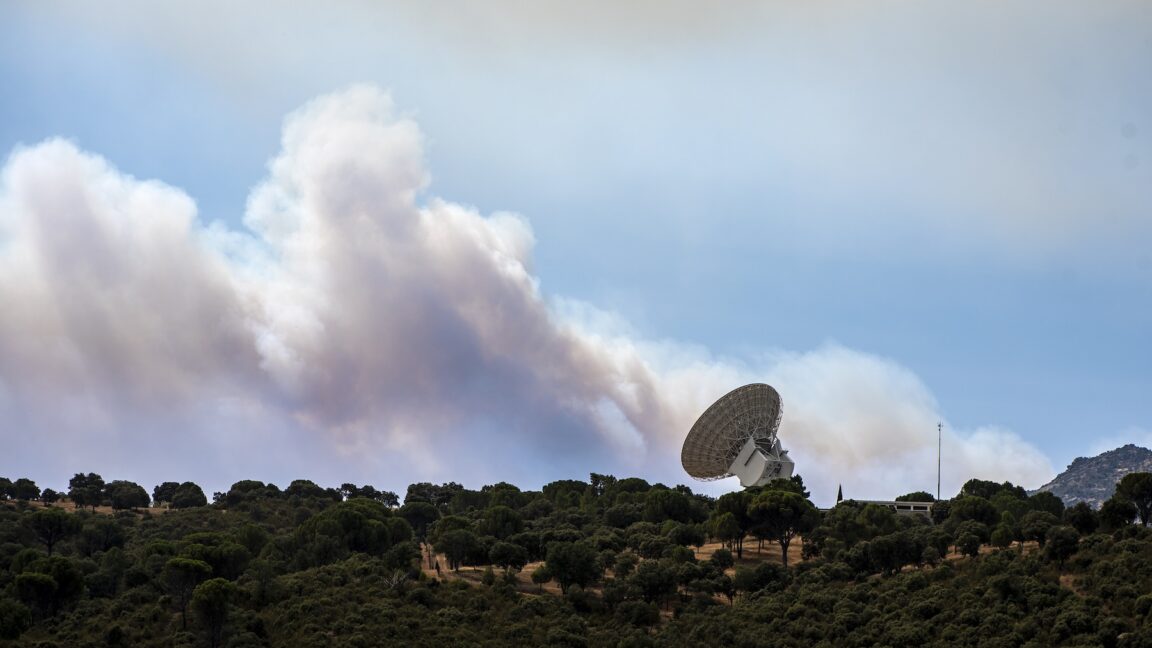
A wildfire in Spain forced NASA to evacuate its Deep Space Network (DSN) facility near Madrid on Wednesday, prompting the agency to suspend operations at one of its three primary ground stations worldwide. The facility tracks and communicates with spacecraft across the solar system, including Mars rovers, the James Webb Space Telescope, and interplanetary probes.
The Robledo de Chavela station, located approximately 60 kilometers west of Madrid, operates massive radio antennas essential for NASA's deep space missions. The evacuation came as a precautionary measure as flames approached the complex. NASA did not immediately confirm damage to equipment, stating that assessments would occur when conditions permitted safe access to the facility.
The DSN operates three major complexes globally: in Spain, California, and Australia. This redundancy ensures continuous spacecraft communication, but the loss of any station reduces operational capacity. The Madrid facility handles critical communication windows for multiple active missions. No details emerged on which specific missions faced immediate impact or whether data transmission delays would affect active operations.
Spanish authorities managed the wildfire response as local conditions worsened. The evacuation highlighted infrastructure vulnerabilities for space agencies operating in regions increasingly affected by extreme weather. Climate patterns have intensified wildfire seasons across Southern Europe, creating new risks for ground-based space infrastructure.
NASA's statement indicated the agency monitored conditions and prepared to resume operations once authorities cleared the facility. The evacuation represented a rare disruption to continuous deep space communication services that operate 24/7. Even brief outages can complicate mission timelines for spacecraft millions of kilometers from Earth, where communication windows occur on fixed schedules.
The incident underscores dependencies on terrestrial infrastructure for space exploration, particularly as missions venture farther into the solar system and require ground stations with powerful transmitters and receivers.