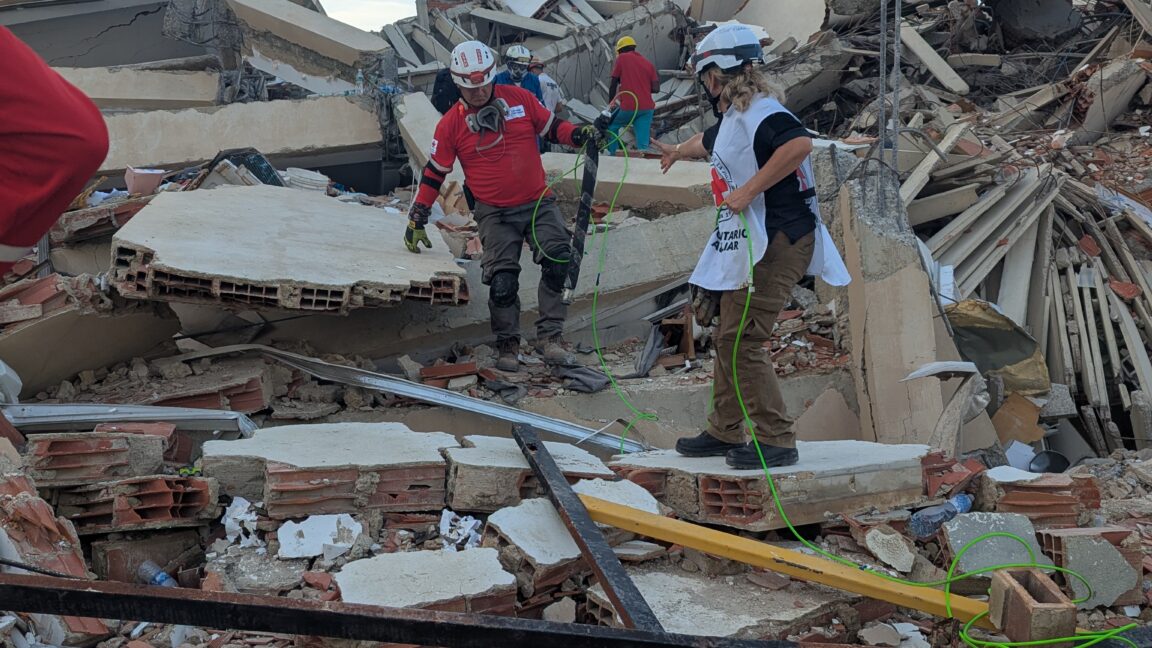
Robot snakes developed by US researchers deployed to Venezuela following a devastating earthquake, searching through collapsed structures for survivors trapped in rubble. The snakebots, engineered specifically for navigating confined spaces where human rescuers cannot safely access, traveled to the disaster site after researchers received an urgent request from Venezuelan authorities.
These serpentine robots excel at threading through narrow gaps, tight corners, and unstable debris piles that would trap or injure human rescue workers. Their articulated design allows them to bend, twist, and move through complex three-dimensional spaces with precision, making them invaluable in post-earthquake recovery operations where time is critical and survivors may be buried deep within structural wreckage.
The deployment represents a practical application of robotics research beyond laboratory settings. Rather than waiting for theoretical validation, the team mobilized quickly to address immediate humanitarian needs. This rapid response demonstrates how specialized robotics can bridge gaps in emergency response capabilities, particularly in developing nations where rescue infrastructure may be limited.
Snakebot technology has evolved over years of research into flexible locomotion systems. Their cable-driven or modular joints enable movement patterns that rigid robots cannot achieve. When equipped with cameras and sensors, they become remote eyes and ears for rescue teams, providing real-time visual feedback from locations too dangerous for human entry.
The Venezuela mission underscores the practical value of robotics investment in disaster response. While snakebots cannot physically extract survivors, they dramatically reduce search time and risk by identifying exact locations of people trapped in wreckage. Rescue teams then use this intelligence to extract survivors more efficiently and safely.
This deployment also highlights growing recognition that specialized robotics deserve dedicated funding and development for humanitarian applications. Earthquake response, building collapse rescue, and search operations in hazardous environments represent high-stakes use cases where robotics solutions can save lives directly.