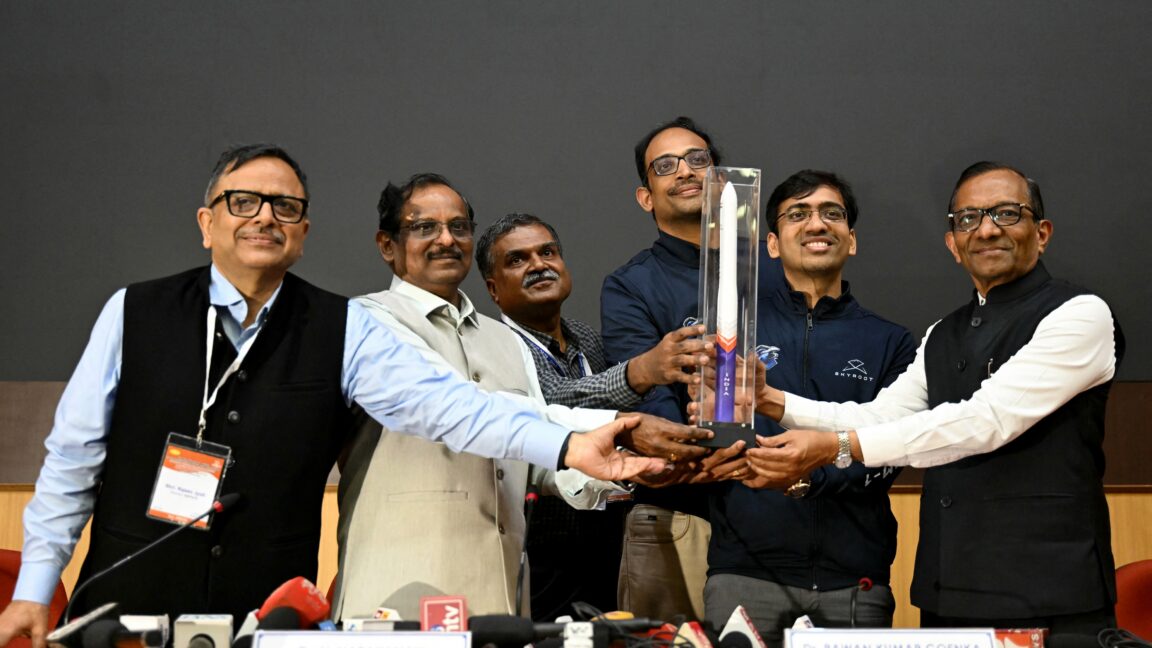
Skyroot Aerospace successfully launched India's first privately-developed orbital rocket on its debut flight, reaching orbit after what the company describes as a dramatic ascent. The achievement marks a watershed moment for India's commercial space sector, breaking the state monopoly held by the Indian Space Research Organisation (ISRO) for decades.
The rocket, called Vikram-S, lifted off carrying a payload to orbit on its maiden flight. This success on a first attempt is rare in the launch industry. Most commercial providers face setbacks during early launches, making Skyroot's achievement noteworthy. The company's founder expressed genuine surprise at the outcome, stating the team never expected to reach orbit on the initial attempt.
Skyroot Aerospace, founded in 2018, developed Vikram-S as a demonstrator for its larger Vikram-1 orbital vehicle. The company operates in Hyderabad and has positioned itself as a competitor to ISRO's launch services while also targeting the global commercial launch market. India's government has actively encouraged private space companies through regulatory reforms and licensing frameworks over the past several years.
The successful launch matters because it validates India's ability to foster competitive commercial spaceflight capabilities outside government agencies. Skyroot's achievement also demonstrates engineering competency among India's private aerospace firms, potentially attracting international customers and investors to India's emerging launch sector.
India's space market has long relied on ISRO for all orbital launches. Private companies faced regulatory and technical barriers for years. Recent policy shifts opened pathways for companies like Skyroot, Agnikul Cosmos, and others to develop launch vehicles. This competition could reduce launch costs for Indian satellite operators and create export opportunities.
Skyroot plans to operationalize Vikram-1 for regular commercial launches. The company targets both Indian government satellite missions and international customers. Success here could establish India as a viable alternative to Space