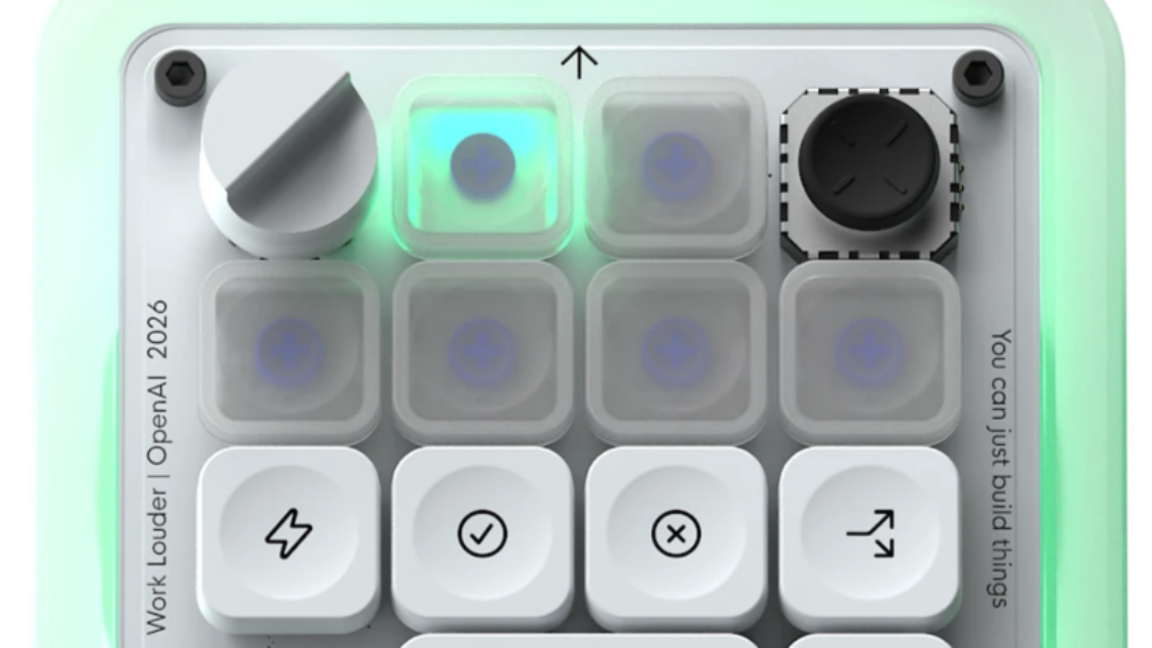
OpenAI has unveiled its first branded hardware product: the Codex Micro, a keyboard with integrated display elements designed to visualize and monitor multiple AI agents running simultaneously.
The device reflects a practical approach to a real problem in AI development. As systems grow more complex and deploy autonomous agents to handle different tasks, developers need better ways to track what each agent is doing in real time. The Codex Micro's light-up interface lets engineers see the status of multiple agentic threads at a glance without constantly switching between windows or dashboards.
This represents OpenAI's first venture into physical products, marking a shift from pure software and API offerings. Rather than building a consumer device, the company targeted developers working with its agent platforms. The keyboard integrates visual feedback directly into the input device itself, eliminating the need for separate monitoring software.
The hardware choice signals OpenAI's belief that AI agents will become commonplace enough that specialized tools for managing them are necessary. As more developers adopt multi-agent systems to handle complex workflows, monitoring becomes critical. A keyboard with built-in status indicators reduces friction and keeps engineers focused on development rather than administration.
The timing aligns with OpenAI's broader push into agentic AI. The company has emphasized agent capabilities across its recent product launches, positioning agents as the next major shift in how businesses use AI. Physical hardware that makes agent management easier removes barriers to adoption.
However, the hardware play raises questions about OpenAI's strategy. Building physical devices requires different expertise than software development and introduces supply chain complexity. Whether the Codex Micro becomes a niche developer tool or the foundation of a broader hardware ecosystem remains unclear. The keyboard's success will depend entirely on whether developers working with multiple agents find it genuinely useful enough to justify replacing their existing keyboards.
OpenAI's entry into hardware suggests the company sees value in deepening integration with its developer ecosystem. For