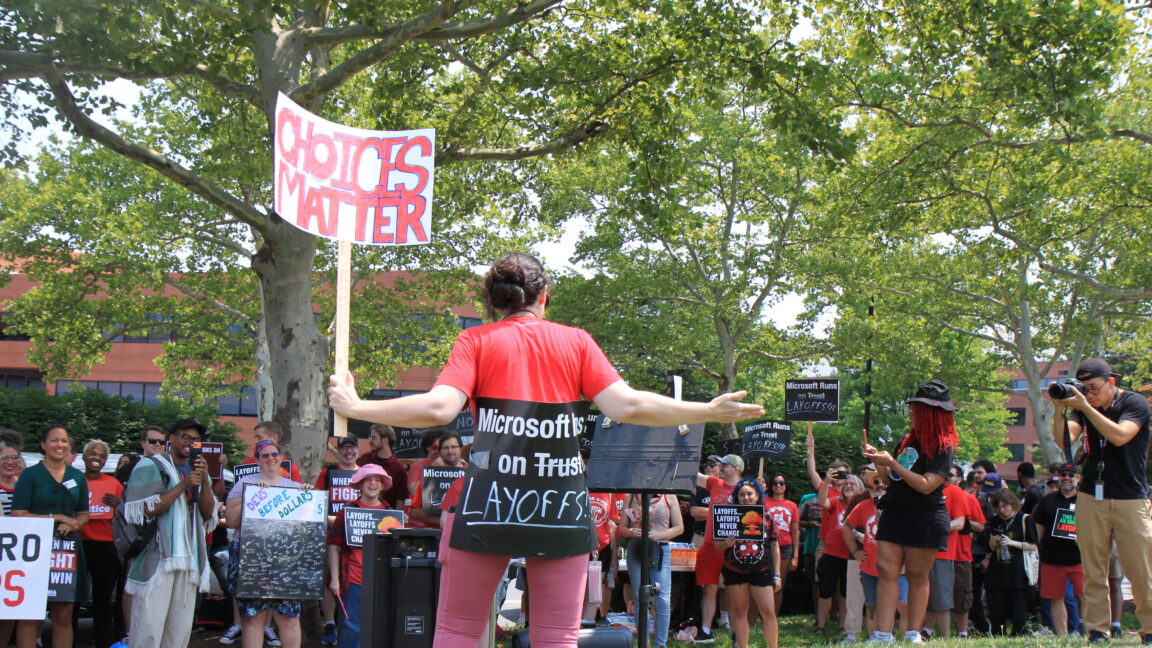
Hundreds of workers gathered outside Xbox's Bethesda headquarters to protest the company's latest round of layoffs, with union representatives calling for an end to what they described as a "perpetual cycle" of job cuts.
The demonstration reflects growing labor tensions at Microsoft's gaming division. Workers and their representatives demanded that the company return to contract bargaining and establish protections against future layoffs. The protest underscores mounting frustration over repeated workforce reductions in the gaming industry, particularly at major studios under corporate ownership.
Xbox has conducted multiple layoff rounds in recent years. The latest cuts eliminated hundreds of positions across multiple studios owned by Microsoft, including Bethesda Softworks and other gaming properties the company acquired. Union organizers argue these reductions follow a pattern where studios face periodic workforce reductions without meaningful input from affected employees or their representatives.
The union's primary demand centers on contract negotiations that would give workers a formal voice in decisions affecting employment. Currently, layoff decisions flow from Microsoft management with limited worker protections or advance notice requirements beyond legal minimums.
Gaming industry layoffs have accelerated across the sector. Companies including Activision Blizzard, EA, and major publishers have announced significant cuts following a period of pandemic-era hiring. Workers argue that studios overhire during boom cycles, then shed staff when revenue projections shift, leaving employees bearing the cost of corporate planning mistakes.
The Bethesda demonstration signals that gaming workers increasingly view unionization as essential protection against employment instability. Previous union efforts at major studios had mixed results, but labor organizing momentum continues building across the industry. Microsoft has not publicly committed to returning to contract negotiations or establishing layoff protections beyond standard severance packages.
The company maintains that workforce adjustments align with business needs and strategic priorities. However, the public nature of the protest, combined with union organizing efforts, suggests Microsoft faces sustained pressure to address worker concerns about job security and