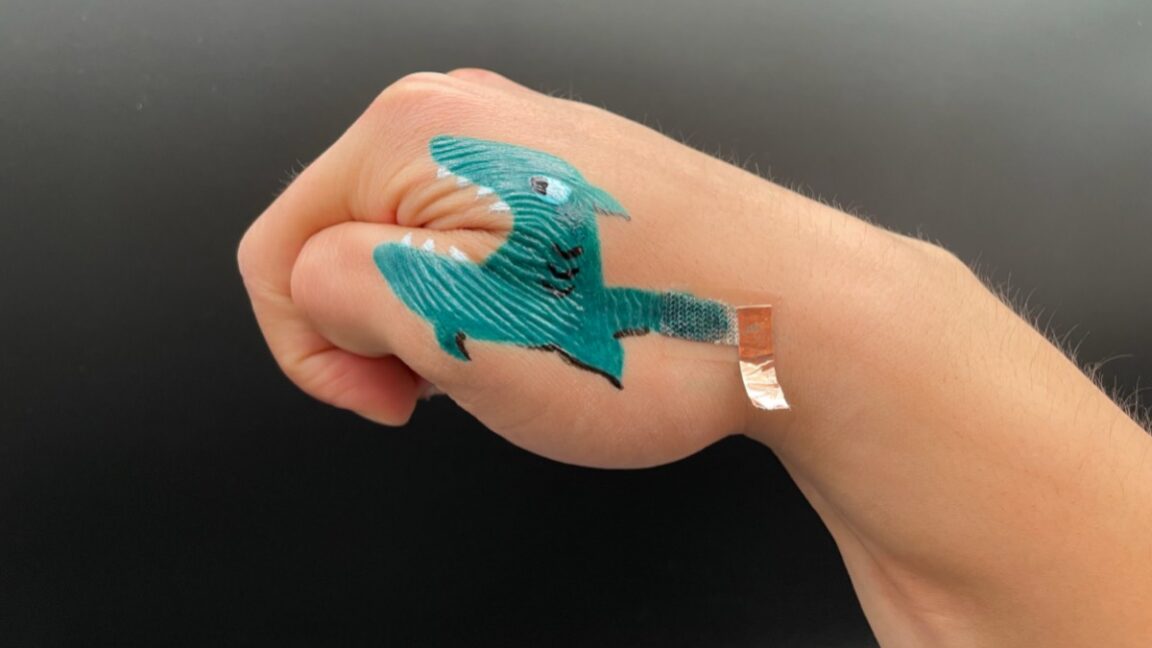
Researchers have developed a novel approach to wearable biosensors by painting conductive ink directly onto skin in custom designs. Once dry, the painted patterns function as working electrodes capable of monitoring health metrics.
The technique bypasses traditional wearable constraints. Rather than relying on rigid devices strapped to the body, the painted electrodes conform perfectly to skin contours and move naturally with body motion. The conductive ink dries into a functional sensor network, eliminating the bulk and discomfort of conventional wearables.
The customizable nature of this approach offers significant advantages. Users can paint sensors in any pattern or location needed for specific monitoring tasks. The pigmented inks allow for color variation, making the sensors visually distinct or even aesthetically appealing. This addresses a real barrier to wearable adoption: many users find traditional monitors uncomfortable or unattractive.
The electrodes created through this method can track multiple physiological signals. Heart rate, temperature, and muscle activity become measurable through the painted sensor networks. The data transmission capability means readings can be recorded and transmitted to medical devices or smartphones for real-time monitoring.
Durability remains a practical consideration. The painted sensors maintain functionality through normal skin movement and moisture exposure for extended periods, though the exact lifespan depends on the specific formulation and application site. Researchers continue refining the ink composition to maximize longevity while maintaining biocompatibility.
This approach represents a meaningful shift in biosensor design philosophy. Rather than forcing users to adapt to rigid, uncomfortable devices, painted e-tattoos adapt to individual bodies and preferences. The technology bridges the gap between clinical-grade monitoring accuracy and the comfort and customization users demand from daily-wear technology.
The implications extend beyond personal health monitoring. Hospitals could deploy rapid sensor networks for patient monitoring without traditional electrode application procedures. Athletes could track detailed performance metrics with minimal equipment. The technology essentially democratizes