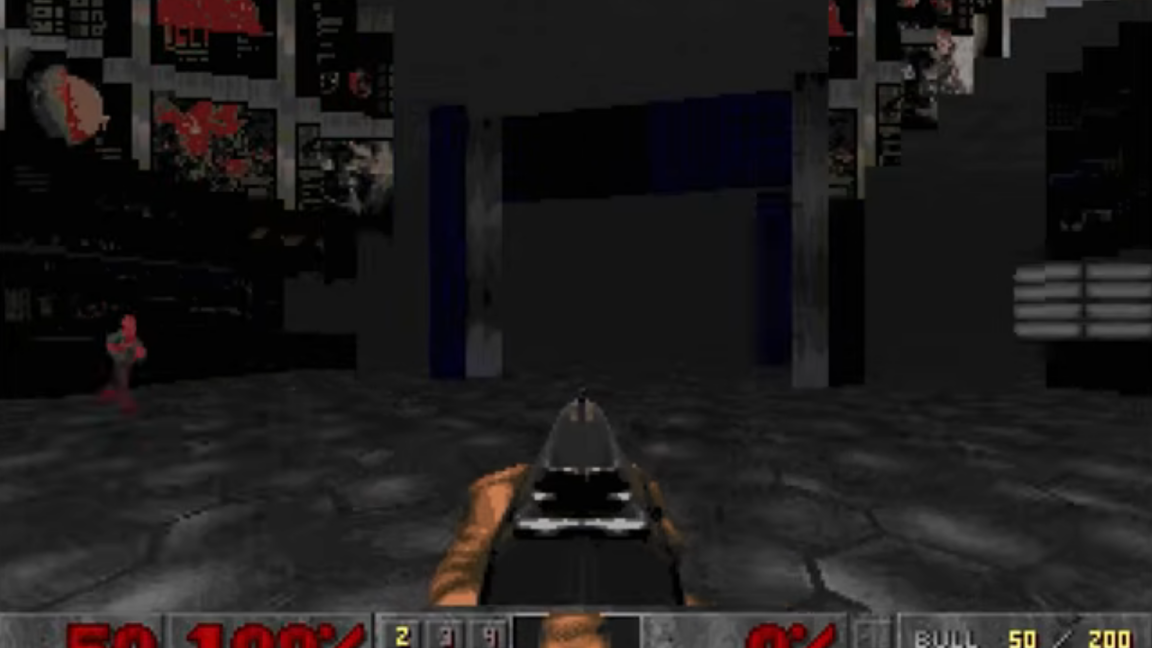
Hackers have successfully ported Doom to Neo Geo arcade hardware, contradicting earlier claims that the task was technically impossible. The achievement involved clever optimization work and graphical compromises that allowed the 1993 first-person shooter to run on the 1990 arcade system.
The Neo Geo, powered by a Motorola 68000 processor and 64KB of RAM, was considered too resource-constrained for Doom's demands. Previous developers had declared the feat infeasible due to the game's polygon rendering requirements and memory footprint. The hackers proved otherwise through aggressive code optimization and strategic visual sacrifices.
The port maintains Doom's core gameplay loop, though it reduces the rendering resolution and simplifies textures compared to the original PC version. The developers stripped unnecessary features and rewrote performance-critical sections in assembly language to squeeze every cycle from the aging hardware. The result runs at playable frame rates with recognizable level layouts and enemy sprites.
This accomplishment demonstrates that "impossible" ports often simply require different approaches rather than fundamental impossibilities. The Neo Geo community has a history of unexpected ports, from Street Fighter 2 adaptations to ambitious homebrew projects that push the system's limits.
The hack raises questions about hardware capability claims. When developers declare something impossible, they typically mean impossible within conventional constraints or time budgets. Given sufficient motivation and expertise, the boundaries shift. This pattern repeats across retro hardware communities, where enthusiasts regularly accomplish what commercial developers deemed unworkable decades earlier.
The Neo Geo Doom port won't replace the original experience, but it validates that creative constraints breed innovation. The project joins a growing catalog of technically audacious ports that expand what classic arcade systems can do, long after their commercial lifespan ended.