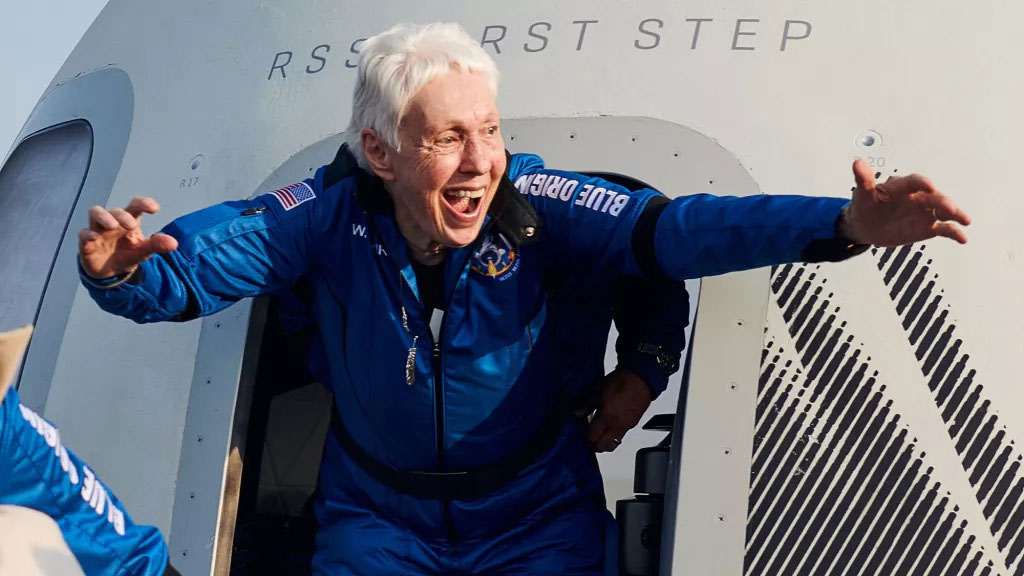
Wally Funk, the pioneering aviator who became the oldest woman to reach space at 82, died at 87. Funk was part of the Mercury 13, an unofficial group of female pilots who underwent astronaut training in the 1960s but were barred from NASA's astronaut corps due to gender discrimination.
Funk logged over 19,000 flight hours across her aviation career, making her one of the most experienced pilots in history. She worked as a commercial airline pilot, flight instructor, and aircraft accident investigator before her spaceflight opportunity arrived decades later. Despite her qualifications, NASA excluded her and other women from the Mercury program, which launched the first American astronauts into space.
Her spaceflight came in 2021 aboard Blue Origin's New Shepard rocket, fulfilling a dream deferred for six decades. At the time, she became not only the oldest person to reach space but also demonstrated that age and gender barriers in spaceflight were arbitrary constraints rather than technical limitations. During the flight, Funk famously said she had been waiting a long time to finally get up there.
Funk's legacy extends beyond her personal achievement. She represented an entire generation of qualified female aviators systematically excluded from the space program. The Mercury 13 women matched or exceeded their male counterparts in physical and psychological testing, yet NASA argued that women should not fly in space. That institutional discrimination persisted for decades until NASA's astronaut corps finally began recruiting women in significant numbers during the 1980s.
Her final flight with Blue Origin symbolized a changing era where commercial spaceflight companies prioritized capability over outdated restrictions. Funk's achievement at 82 underscored that spaceflight itself posed no inherent barrier to older participants, reopening questions about why NASA had rejected her and her peers so completely.