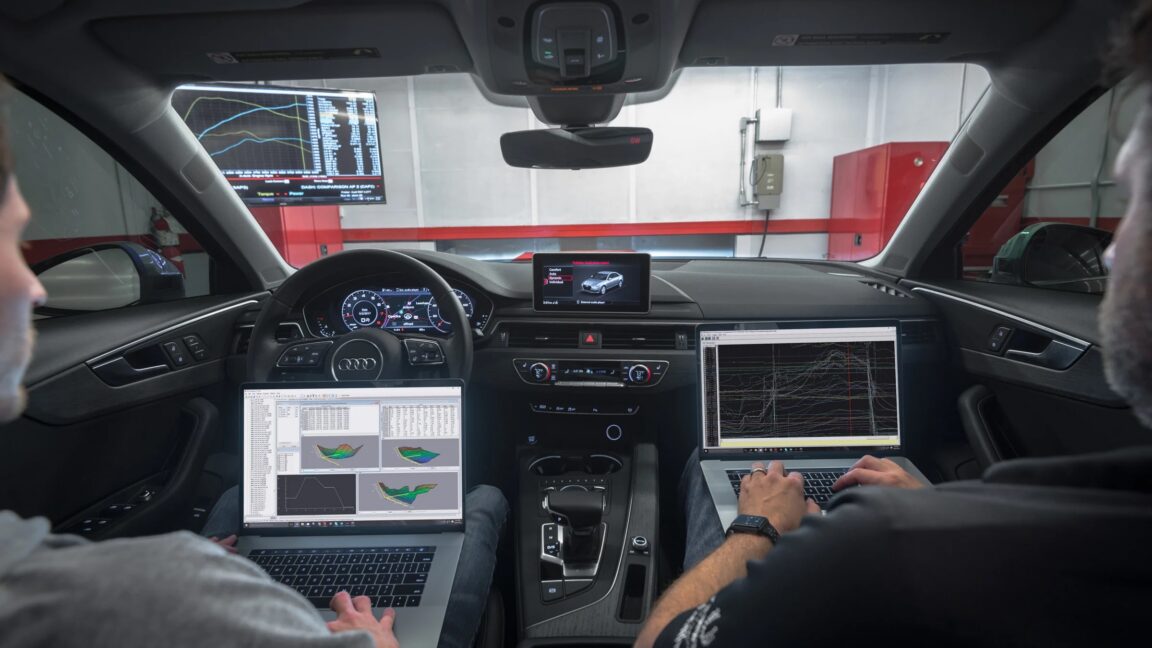
ECU tuning, the practice of reprogramming a vehicle's engine control unit to boost performance, has become an escalating technical battle between automakers and independent tuners.
Manufacturers lock down their chips with increasingly sophisticated software protections. Tuners respond by developing new tools to circumvent these defenses. The cycle repeats.
The stakes matter. ECU modifications can unlock additional horsepower, improve fuel efficiency, or customize vehicle behavior. A tuned car might gain 50-100 extra horsepower depending on the engine type. Performance enthusiasts and independent shops see this as legitimate customization. Automakers view it as a threat to warranty coverage, emissions compliance, and vehicle safety systems.
Automakers embed proprietary code and encryption into modern ECUs. Tesla, BMW, and Ford have invested heavily in making their systems difficult to access. Some manufacturers tie firmware updates to specific hardware tokens, making unauthorized modifications harder to apply. Others implement kill switches that detect tampering and disable functions.
The tuning community has responded. Companies like Cobb Tuning, APR, and others develop custom software and hardware adapters to bypass restrictions. Some use packet sniffing and reverse engineering. Others exploit vulnerabilities in legitimate diagnostic ports. The technical sophistication required keeps rising.
This arms race creates collateral damage. Tuners argue they're enabling consumer choice and mechanical freedom. Automakers counter that unauthorized modifications compromise emissions systems, battery management in EVs, and autonomous safety features. A tuned vehicle that malfunctions during an accident could expose manufacturers to liability.
The legal landscape remains murky. The Digital Millennium Copyright Act technically prohibits circumventing security measures, but enforcement against individual tuners has been limited. Right-to-repair advocates argue customers should control their own vehicles. Automakers insist they need control over safety-critical systems.
For now, the battle continues.