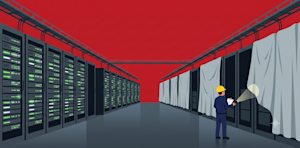
Enterprise companies have deployed AI agents without adequate safeguards in place, then scrambled to add controls after the fact. A VentureBeat survey of 573 technical leaders at companies with 100+ employees reveals this pattern plainly: 86% report their GPUs run at half capacity or less, signaling massive underutilization of expensive hardware investments.
The research surveyed builders across five control layers of the agentic stack. Enterprises deployed knowing their governance gaps existed. Now they are retrofitting to meet their own standards and budgeting heavily for it. Roughly 60% of enterprises plan to switch or add vendors within the next 12 months across each of the five control layers. A third plan to move within a quarter.
The five control layers where enterprises operate include identity for agents, which determines what permissions each agent has and under whose credentials it operates. This foundational layer sits at the core of agent governance. Without it locked down before deployment, enterprises risked agents accessing systems and data outside intended scope.
The GPU utilization data points to a broader problem in enterprise AI spending. Companies bought substantial compute capacity expecting rapid scaling or workloads that never materialized at projected volumes. Instead, they face underutilized infrastructure and mounting pressure to justify capital expenditure.
This gap between deployment speed and governance maturity reflects a clash between business urgency and engineering rigor. Technical leaders felt pressure to move fast with agentic systems to stay competitive. Controls landed second, not first. The retrofitting now happening represents a correction, but it also reveals the cost of that sequence.
Enterprise spending on control layer vendors will likely surge over the next year as companies systematize their governance. The hardware underutilization combined with governance gaps creates a dual opportunity for vendors: sell better control software and help enterprises optimize GPU allocation alongside tighter policies. The buildout Wall Street debated continues, but it looks messier