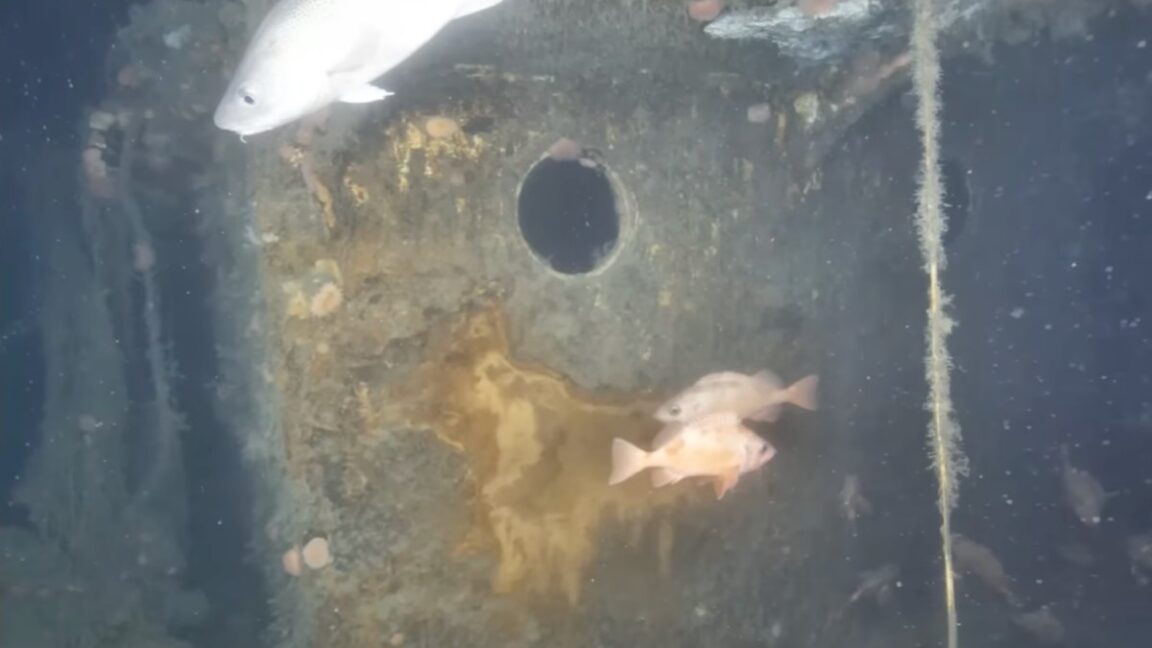
The Quest, the ship that carried polar explorer Ernest Shackleton during his final Antarctic expedition, now rests 10,000 feet below the Weddell Sea. A recent underwater expedition located the wreck in remarkably good condition given its 1922 sinking, though deterioration has progressed faster than researchers anticipated.
The vessel sits upright on the seafloor, its wooden hull preserved by the frigid, oxygen-poor waters of Antarctica. Initial sonar scans and submersible dives revealed the ship's structure remains largely intact, with visible details including the ship's bell and stern fixtures still discernible through corrosion and marine growth.
What surprised the research team most was the wreck's transformation into a thriving deep-sea habitat. The Quest has become home to a diverse array of organisms, from sponges and coral species to fish and crustaceans that have colonized nearly every surface. The ecosystem clustering around the wreck demonstrates how sunken vessels at extreme depths can support unexpected biological diversity.
The expedition used advanced deep-sea submersibles to explore the wreck without direct intervention, protecting the historic site from disturbance. Research teams documented the ship's layout and condition through high-resolution imaging, creating a detailed baseline record of the wreck as it exists today.
The Quest holds particular significance in exploration history. Shackleton acquired the ship for his final Imperial Trans-Antarctic Expedition, though the expedition never reached Antarctica due to the ship becoming trapped in pack ice. Shackleton and his crew escaped the crushing vessel and eventually survived on Elephant Island before rescue. The wreck's discovery in the Weddell Sea fulfills a long-standing goal among maritime archaeologists and polar historians to locate this piece of exploration heritage.
The findings highlight the dual nature of sunken ships. They serve as archaeological records of human endeavor while simultaneously functioning as artificial