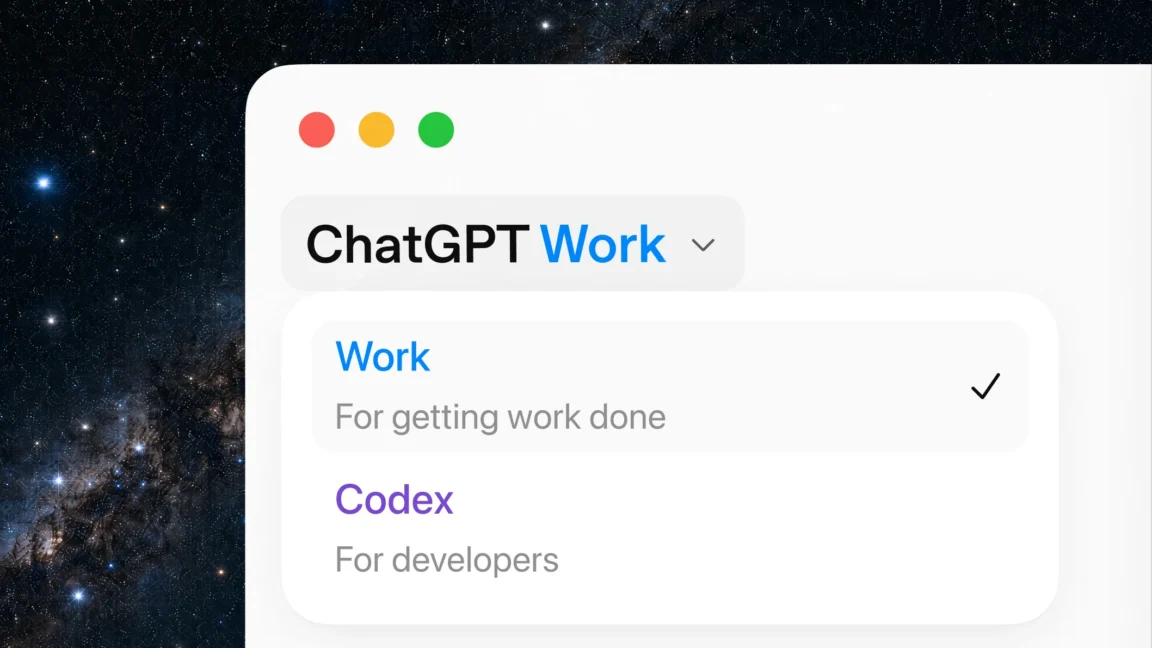
OpenAI has rebranded its Codex tool and positioned it as an agent capable of handling extended, autonomous workflows. The system promises to operate independently for hours if necessary, marking a shift from traditional chatbot interactions toward persistent task execution.
The rebranded tool represents a meaningful change in how OpenAI frames AI assistance. Rather than positioning the system as a conversational aid that responds to individual prompts, the company now emphasizes its ability to manage complex, multi-step work without continuous human intervention. This aligns with broader industry trends toward agentic AI, where models execute sequences of actions toward defined goals.
The extended runtime capability is the technical centerpiece. OpenAI claims the tool can maintain context and make decisions across extended periods, allowing it to handle tasks that would previously require human supervision or breaking work into smaller, manually-managed chunks. This addresses a real workflow bottleneck for knowledge workers who currently must monitor AI systems closely or segment complex projects into digestible pieces.
The practical applications span multiple domains. Software developers could deploy the system to handle routine code refactoring, bug fixes, or feature implementation across large codebases. Researchers could use it to process datasets or run iterative analyses. Content teams could manage multi-stage publishing workflows. The underlying promise is simple: less human oversight, fewer interruptions, more continuous progress.
However, extended autonomy introduces new problems. Hallucinations compound over longer runtimes. Error correction becomes harder when a system runs unattended for hours. Trust and validation become critical issues, since humans cannot monitor every decision the system makes. OpenAI does not address these failure modes directly in the announcement.
The rebranding itself signals OpenAI's confidence in the technology but also suggests the original Codex positioning had limitations. The company is explicitly moving away from the "code completion" framing toward a broader "work automation" angle, targeting a wider