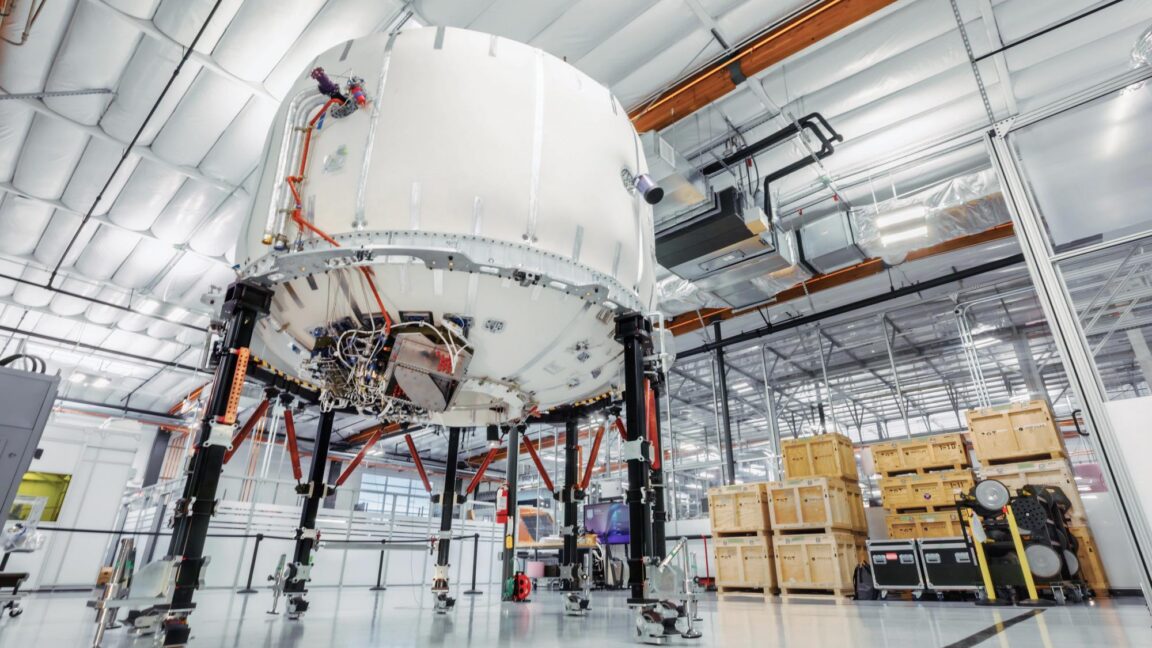
The U.S. military's latest launch competition has attracted an unexpected competitor, one that operates outside traditional aerospace manufacturing channels. The entrant challenges conventional assumptions about who can participate in national security space missions.
The comment "I think it's fair to say that Phase 3 did not contemplate this" suggests the competition's organizers never anticipated this type of participant entering the bidding process. The military's phased approach to selecting launch providers typically focuses on established space companies with proven track records in rocket development and orbital operations.
This newcomer represents a shift in how the Department of Defense approaches spacelift services. Rather than relying exclusively on legacy contractors and established NewSpace companies, the military now faces competition from an entity operating in a different domain entirely. The development reflects broader Pentagon efforts to diversify its launch supplier base and reduce dependence on a small number of providers.
The inclusion of unconventional competitors in military procurement challenges industry assumptions about qualification requirements and technical expertise. If the participant succeeds, it could reshape how the Defense Department evaluates launch providers going forward, potentially opening doors to other non-traditional bidders.
The competitive dynamics at play here matter for national security. A fragmented launch market with multiple suppliers reduces vulnerability to supply chain disruptions and single-point failures. Competition also drives innovation and cost reduction across the sector.
The quote's tone suggests some friction or surprise within the military acquisition community. Phase 3 competition rules apparently contain language specific enough to include or exclude certain participant types, yet this entrant appears to slip through existing framework gaps. Whether this represents a loophole, an oversight, or an intentional opening in the rules remains unclear.
What's certain is that the military's approach to spacelift competition is evolving. Traditional aerospace dominance faces pressure from competitors approaching launch differently. This trend will likely continue as the Pentagon seeks fresh solutions to persistent space access challenges.