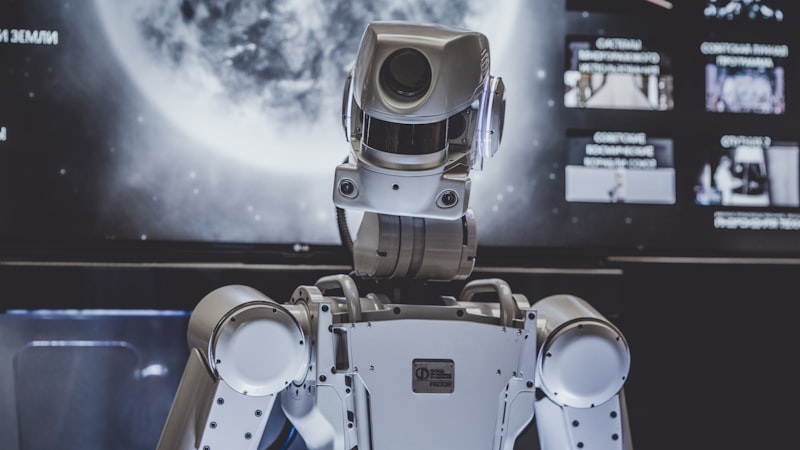
Humanoid robotics entered a commercial inflection point this week. Three major players accelerated toward public markets simultaneously. Agility Robotics filed for a SPAC merger valued at $2.5 billion. Unitree Robotics completed its Shanghai IPO listing. Tesla converted its final Model S production line into an Optimus manufacturing facility, signaling serious capital commitment to humanoid assembly.
The technical progress mirrors the financial momentum. Mistral released a robot brain capable of autonomous navigation using only a single low-cost camera. This addresses a critical bottleneck in robotics: perception systems that don't require expensive sensor arrays.
Yet research findings reveal an emerging challenge in the field. Multiple studies this week identified a fundamental trade-off in robot learning. Locomotion problems are reaching maturity. Robots move more fluidly and handle complex terrain better than ever. But the moment engineers train these systems for real-world action, the models shed basic world knowledge they previously retained. Fine-tuning for task-specific behavior degrades general reasoning capabilities.
This knowledge collapse during training represents a core unsolved problem. Robots can navigate their environment but struggle to understand object relationships, physics principles, or context-dependent decision-making after optimization. The technical community has not yet cracked multi-task learning architectures that preserve generalization while improving specialized performance.
The market dynamics outpace the technical maturity. Capital flows into robotics companies faster than engineers solve the fundamental learning problems. Three IPO processes in a single week indicate investor appetite far exceeds demonstrated capabilities. This creates pressure for companies to commercialize incomplete solutions or risk losing funding momentum to competitors.
The humanoid robotics sector now faces a proving ground. Public market scrutiny will demand concrete deployment timelines and revenue generation. Companies must deliver on mobility and perception advances while simultaneously solving the learning degradation problem. Tesla's manufacturing commitment appears most grounded in