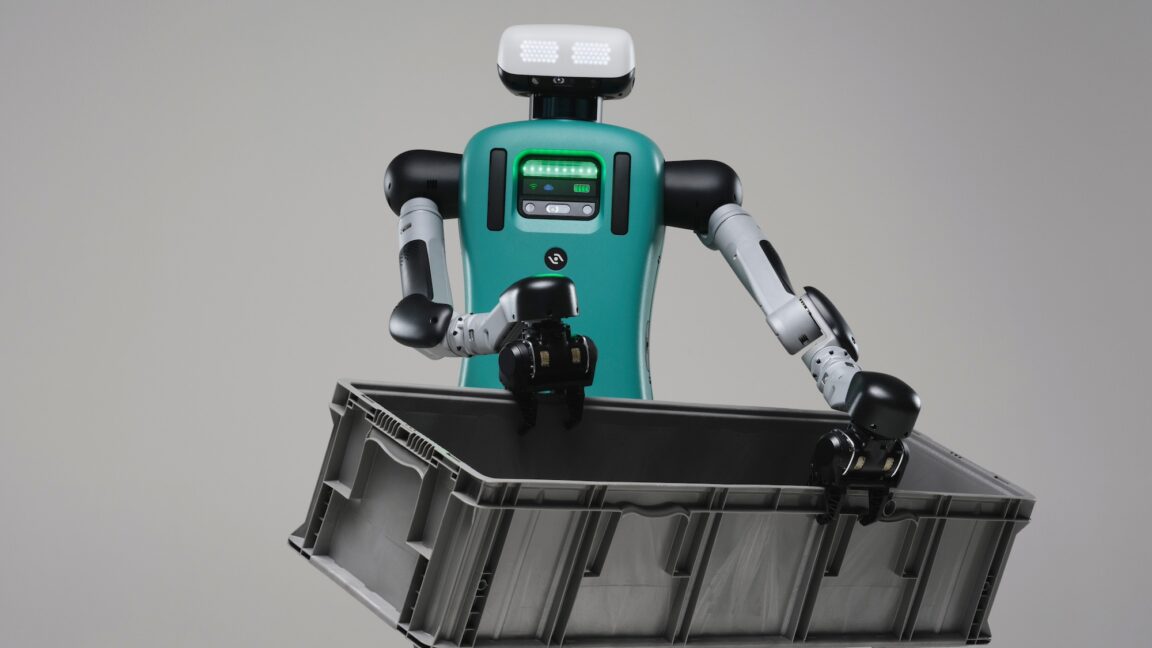
Advances in AI are pushing robot autonomy into new territory, enabling machines to handle increasingly complex workplace tasks without constant human direction. The shift hinges on large language models and computer vision systems that let robots understand their environment, interpret instructions, and adapt to unexpected obstacles.
Leading robotics researchers point to real progress in perception and reasoning. Robots can now process natural language commands, understand spatial relationships, and plan multi-step tasks. Companies like Boston Dynamics, Figure AI, and others are moving humanoid platforms from labs into controlled industrial settings. These systems combine pretrained AI models with domain-specific training to handle manufacturing, logistics, and warehouse work.
The gap between today's capabilities and true autonomy remains substantial. Current robots excel at repetitive tasks in structured environments but struggle with variability. A robot trained to pick objects in one warehouse layout needs retraining for another. Generalization remains the bottleneck.
Deployment in homes faces steeper challenges. Domestic spaces demand flexibility robots don't yet possess. A home robot must navigate cluttered rooms, interpret vague requests, handle unexpected failures, and operate safely around people. Safety protocols, liability questions, and technical limitations keep consumer robotics in early stages.
Researchers emphasize that autonomous robots won't replace human workers wholesale. Instead, they'll handle dangerous, repetitive, or physically demanding tasks. The realistic trajectory involves human-robot collaboration in defined roles, not fully independent operation.
The economics are shifting too. Hardware costs drop as AI models become cheaper to run and easier to adapt. This makes deployment financially viable for smaller operations, not just major manufacturers.
What remains uncertain is the timeline. Some tasks may see widespread robot autonomy within two to three years. Others, particularly those requiring genuine problem-solving or human-level dexterity, could take a decade or longer. The robotics industry is learning that autonomy arrives unevenly, task by task, rather