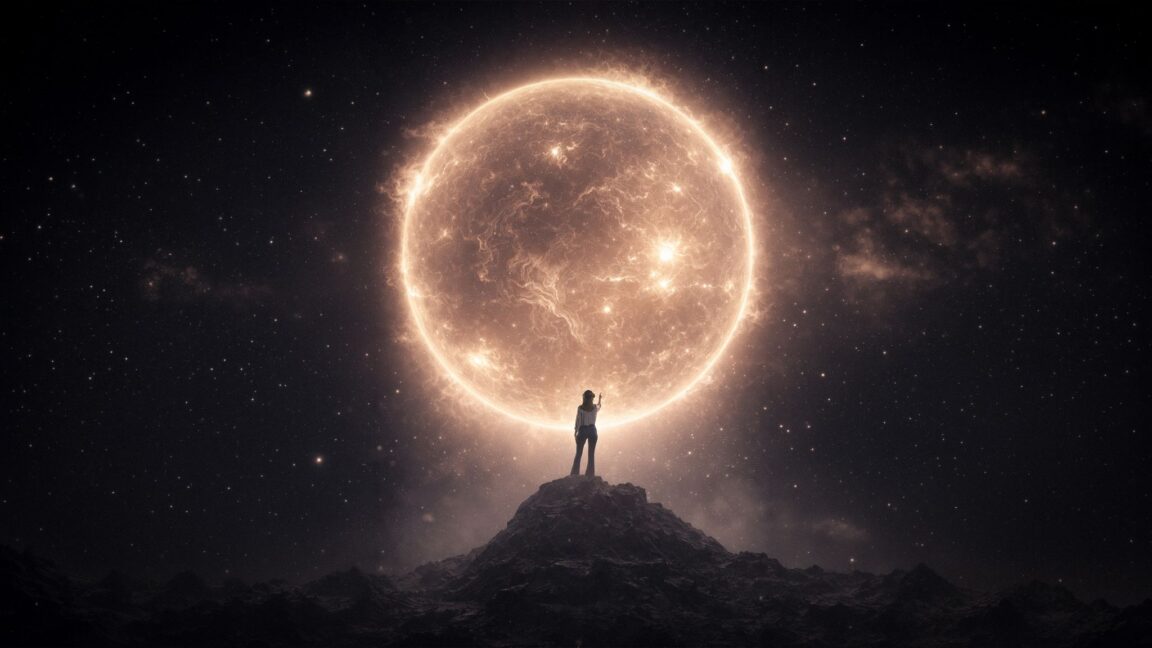
A new VR experience lets users explore astronomical phenomena from inside virtual environments. The walkthrough takes visitors to stars, exoplanets, and major observatories, blending immersive spatial computing with educational astronomy content.
The experience appears designed to make complex celestial concepts accessible through embodied learning. Rather than viewing astronomical data on a 2D screen, users move through three-dimensional representations of cosmic objects and facilities. This spatial approach helps encode spatial relationships between celestial bodies and observatories.
The application targets educational institutions and general audiences interested in astronomy. Schools can use it to supplement planetarium visits or traditional astronomy lessons. Casual learners get a low-cost alternative to in-person observatory tours.
VR astronomy applications occupy a growing niche in educational technology. Other platforms offer similar experiences, but the inclusion of exoplanet visits distinguishes this product. Exoplanet research remains one of astronomy's most active frontiers, with thousands of confirmed discoveries since 1995. Making that data tangible in VR format helps non-specialists grasp the scale and diversity of planetary systems beyond Earth's solar system.
The walkthrough format suggests linear progression through different locations rather than a free-exploration sandbox. This constrains user agency but simplifies navigation and ensures visitors encounter intended content.
Technical implementation likely leverages existing VR platforms or standalone headsets. The rendering quality needed for astronomical visualizations remains computationally modest compared to photorealistic game engines, since space contains vast empty regions. This makes the experience feasible on consumer-grade hardware.
Adoption will depend on content depth and accuracy. Astronomy enthusiasts demand precision in orbital mechanics, stellar classification, and observational data. Surface-level visualizations without scientific grounding will alienate educated audiences. Conversely, overly technical presentations deter casual learners.
The experience positions VR as a distribution channel for science communication. Rather than