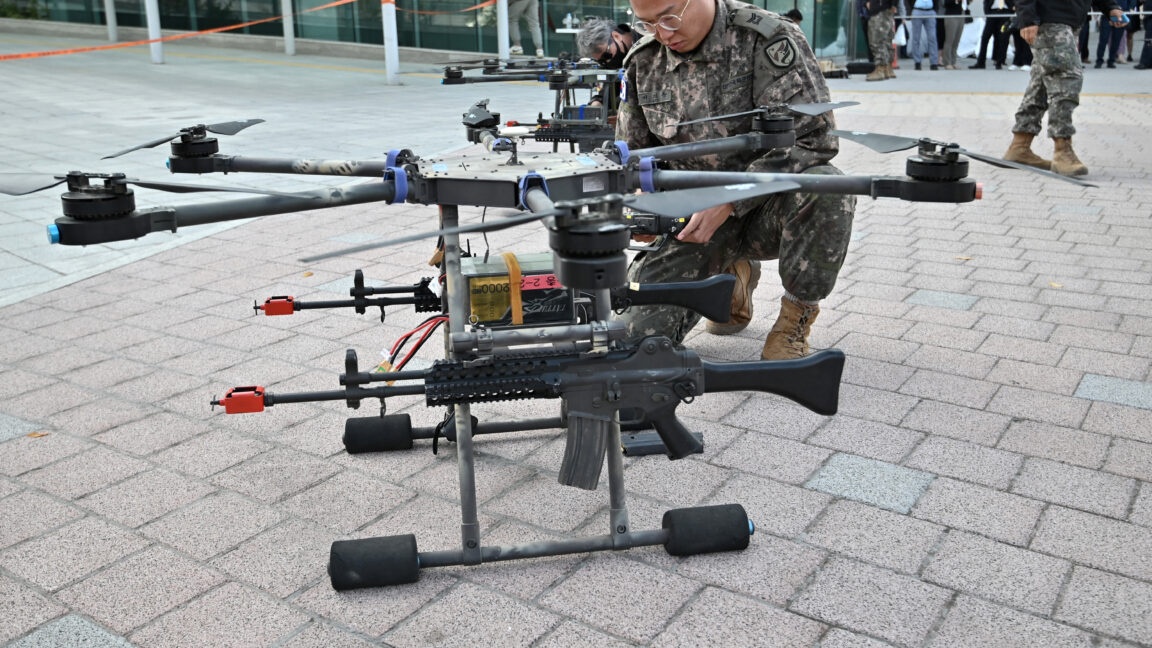
South Korea's military will undergo a sweeping transformation to train its 500,000-strong force as "drone warriors." The country plans to integrate unmanned systems across all combat roles, treating drones as universal tools rather than specialized equipment.
The initiative represents a significant shift in military doctrine. Instead of designating drone operators as a separate specialty, South Korea intends to make drone proficiency a baseline skill for all service members. Infantry, armor, artillery, and air units will all receive training on drone operations alongside their traditional combat roles.
This approach reflects lessons learned from recent conflicts, particularly the Ukraine war. Ukrainian forces demonstrated that distributed drone operations across multiple unit types can overwhelm conventional defenses and improve targeting efficiency. South Korea, facing North Korea's substantial military across a fortified border, sees drone proliferation as a force multiplier that can reduce dependence on expensive manned platforms and personnel.
The training program focuses on both tactical and strategic applications. Small quadcopter drones will enable front-line soldiers to conduct reconnaissance and coordinate strikes. Larger unmanned systems will support battalion and division-level operations. The military also plans to integrate AI-assisted targeting and autonomous flight capabilities to reduce operator workload.
South Korea's defense budget already supports drone development. The country has invested heavily in indigenous unmanned systems, including tactical reconnaissance drones and combat-capable platforms. Making drone skills universal across the military accelerates the integration of these technologies into existing command structures.
The timeline and implementation details remain limited, but South Korea's defense ministry expects the transition to occur over the next several years. The program will require substantial investment in training infrastructure, simulator systems, and new procurement standards for compatible drone platforms across services.
This strategy positions South Korea as one of the first major militaries to treat drones as core competency rather than niche capability. If successful, other NATO and Indo-Pacific militaries will likely follow similar paths to restructure their forces