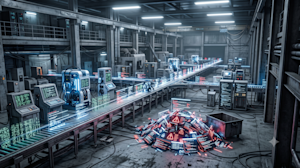
LLMs are accelerating code generation, but companies chasing "software factory" models risk shipping defective products at scale. The comparison to physical manufacturing reveals a critical gap: speed without quality control destroys value.
Large language models have lowered coding barriers and boosted individual developer output. Organizations now treat software development as a production system, not a craft. Traditional software development lifecycles and CI/CD pipelines cannot handle this velocity. Companies are pivoting toward "software factory" frameworks that mirror industrial manufacturing.
The problem is obvious. Physical factories succeeded because they paired increased output with rigorous quality controls, standardized processes, and systematic defect prevention. Most software teams skip this part. They obsess over speed and automation while neglecting the systems that catch errors before they reach production.
Current development practices assume humans review code carefully. LLMs write faster than humans can review. Organizations that simply increase velocity without building corresponding quality infrastructure don't create factories. They create defect pipelines.
Effective software factories require several components physical factories perfected decades ago. First, automated testing at every stage, not just deployment. Second, standardized processes that enforce correctness, not just speed. Third, real-time monitoring systems that catch failures instantly. Fourth, explicit quality gates that slow production when defect rates spike.
The software industry lacks mature frameworks for this transition. Most teams add LLM-powered coding tools to existing processes designed for slower human output. The result: more bugs shipped faster, technical debt compounds, and maintenance costs explode.
Companies treating software development as pure production miss the engineering requirement. Software factories demand treating defect prevention as core infrastructure, not an afterthought. This means investing in automated testing frameworks, formal verification tools where critical, and human review gates that actually slow production when necessary.
The winners in this shift won't be companies that write the most code. They'll be companies that build factories where quality gates