The AI frontier expanded dramatically this week across multiple domains. Open-weight models now span a massive range, from a 1.6-trillion-parameter system down to a 230-million-parameter model running on a Raspberry Pi, democratizing access to capable AI across hardware tiers.
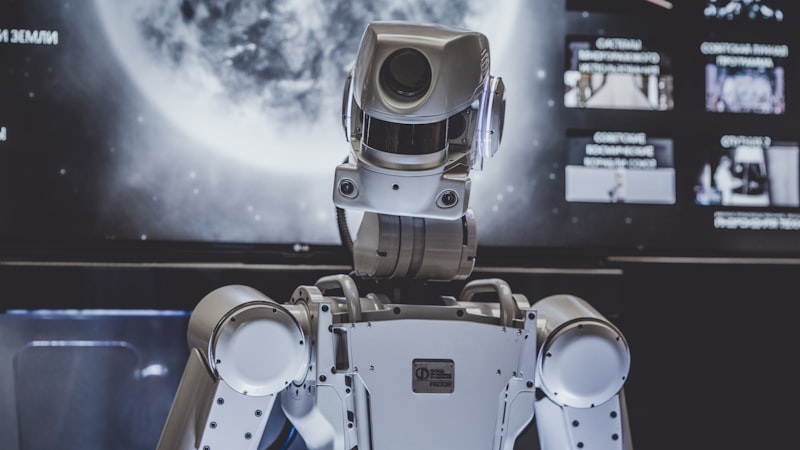
Robotics and world modeling saw practical breakthroughs. A startup is training robotic agents on video game environments to control real robots in physical spaces, leveraging simulation for real-world tasks. Meanwhile, Yann LeCun's team at Meta accelerated world model performance by 48x, a substantial efficiency gain that makes the technology more practical for deployment.
Medical AI delivered concrete results. GPT-5 Pro solved a three-year immunology research puzzle, while a founder successfully used Claude to analyze his own cancer scans, demonstrating AI's utility in healthcare diagnostics and research acceleration. These cases show AI moving beyond theoretical capability into solving actual problems.
AI agents reached ubiquity this week, now embedded across smartphones and devices. This expansion introduces new security concerns. The proliferation of agents on consumer hardware creates fresh attack surfaces that security teams must now defend, as billions of devices run autonomous AI systems.
The breadth matters. In a single week, the field advanced modeling speed, extended capable AI to tiny devices, solved domain-specific research problems, and deployed autonomous agents at scale. Each advancement alone would merit attention. Together, they signal an inflection point where AI capability stops being constrained by hardware access or computational cost, and starts being limited primarily by algorithmic innovation and real-world application design.
The immediate implication: AI infrastructure becomes less of a bottleneck. The real competition shifts to training better agents, solving harder problems, and securing an exponentially larger attack surface.