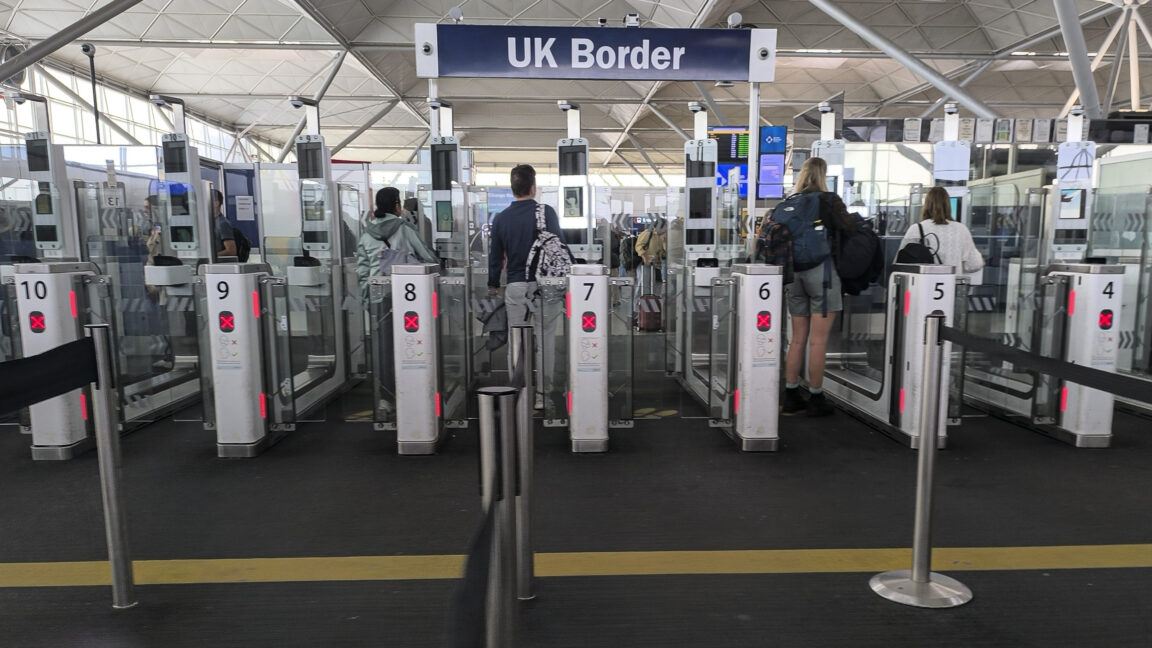
The UK government plans to deploy facial recognition technology to verify the ages of asylum-seekers, even after internal testing revealed the systems frequently misidentify age. The Home Office conducted trials on age-estimation AI and found significant error rates, yet officials decided to proceed with implementation anyway.
The decision raises serious concerns about due process. Age determinations carry enormous consequences for vulnerable populations. Minors classified as adults lose access to child protections and specialized services. Adults wrongly identified as children face different legal treatment and detention procedures. Errors become nearly impossible to correct once recorded in immigration systems.
Facial recognition for age verification operates on inherently flawed premises. Skin texture, bone structure, and facial features vary dramatically across ethnicities, genders, and individuals. Studies consistently show these systems perform worse on women and people with darker skin tones. Age estimation compounds these biases because aging itself is highly variable and subjective.
The Home Office's own testing data demonstrated the technology produced unreliable results across different demographics. Despite this evidence, officials framed proceeding as a matter of efficiency and cost reduction. Scanning faces takes minutes compared to hours for traditional age assessments conducted by trained professionals.
Privacy advocates and civil rights groups have condemned the plan. The technology creates permanent digital records of asylum-seekers' biometric data with minimal oversight or deletion protocols. This data becomes available to law enforcement and intelligence agencies under broad information-sharing agreements.
The UK isn't alone in experimenting with automated age verification for migrants. Several EU countries have tested similar systems, often with similarly disappointing accuracy rates. However, the speed of implementation often outpaces rigorous validation.
This approach inverts standard technology deployment logic. Best practice demands proving systems work reliably before applying them to high-stakes decisions affecting individuals' lives and freedoms. The UK has instead chosen to prove through real-world use on one of society's most vulnerable groups.