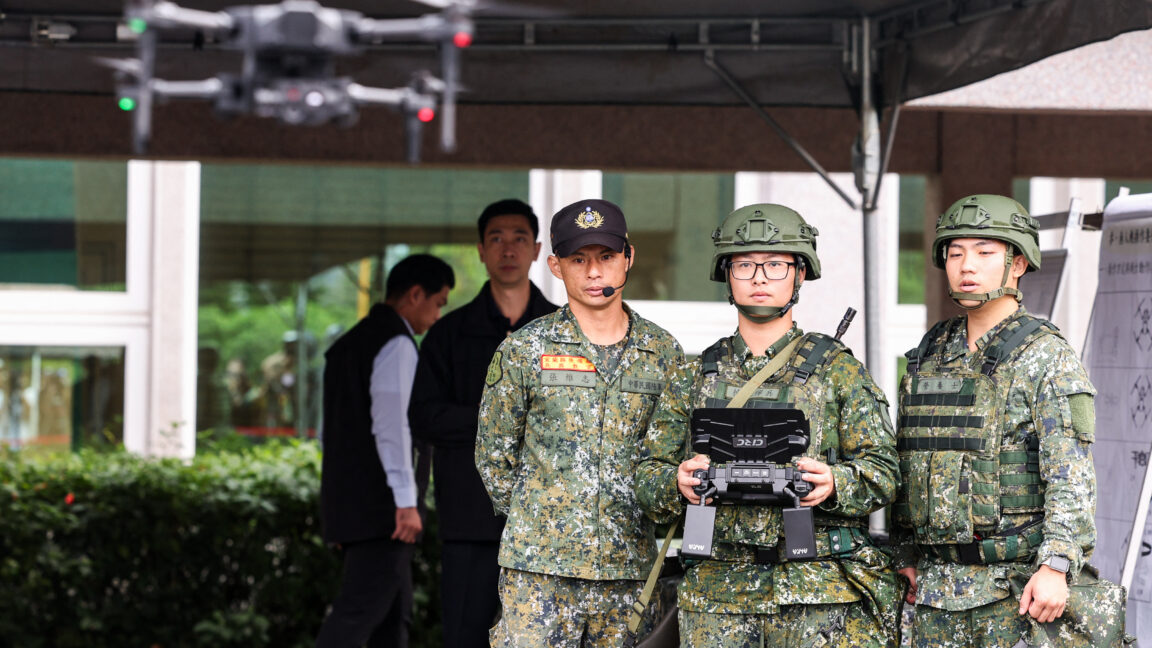
Taiwan is scaling up domestic drone production to strengthen its defenses against China while positioning itself as a potential supplier to other nations, according to recent reports. The island's government has committed to expanding its drone manufacturing capacity as part of a broader military modernization strategy.
Taiwan's drone industry focuses on both surveillance and loitering munitions, systems designed to address asymmetric threats posed by China's numerical superiority in traditional forces. By developing indigenous drone capabilities, Taiwan reduces dependence on foreign suppliers and accelerates deployment of systems tailored to its specific operational environment. The island faces pressure to field defensive capabilities quickly, given China's military buildup across the Taiwan Strait.
The Taiwanese government views drone manufacturing as a dual-purpose investment. Domestic demand for defense creates production infrastructure that companies can leverage to export systems to allied nations and partners seeking alternatives to Chinese technology. This mirrors strategies used by Israel and other drone manufacturers that built domestic capabilities first, then expanded to international markets.
U.S. military interest in Taiwanese drone technology remains limited compared to American and Israeli systems, but Taiwan's lower costs and specialized designs for island defense create potential openings. Taiwan's drones are optimized for defending against threats Taiwan actually faces, not hypothetical large-scale conflicts elsewhere.
The drone push represents Taiwan's broader shift toward asymmetric defense. Rather than competing with China in traditional military categories, Taiwan invests in systems that increase the cost and complexity of military action against the island. Drones fit this calculus perfectly: they're cheaper than fighters or naval vessels, can be produced domestically, and force attackers to address numerous small threats rather than a few high-value targets.
Taiwan's defense ministry has not disclosed specific production numbers or timelines, but the strategic direction is clear. The country's semiconductor expertise and manufacturing capabilities position it well to develop advanced drone systems. Success in this sector could establish Taiwan as a credible defense technology provider while strength