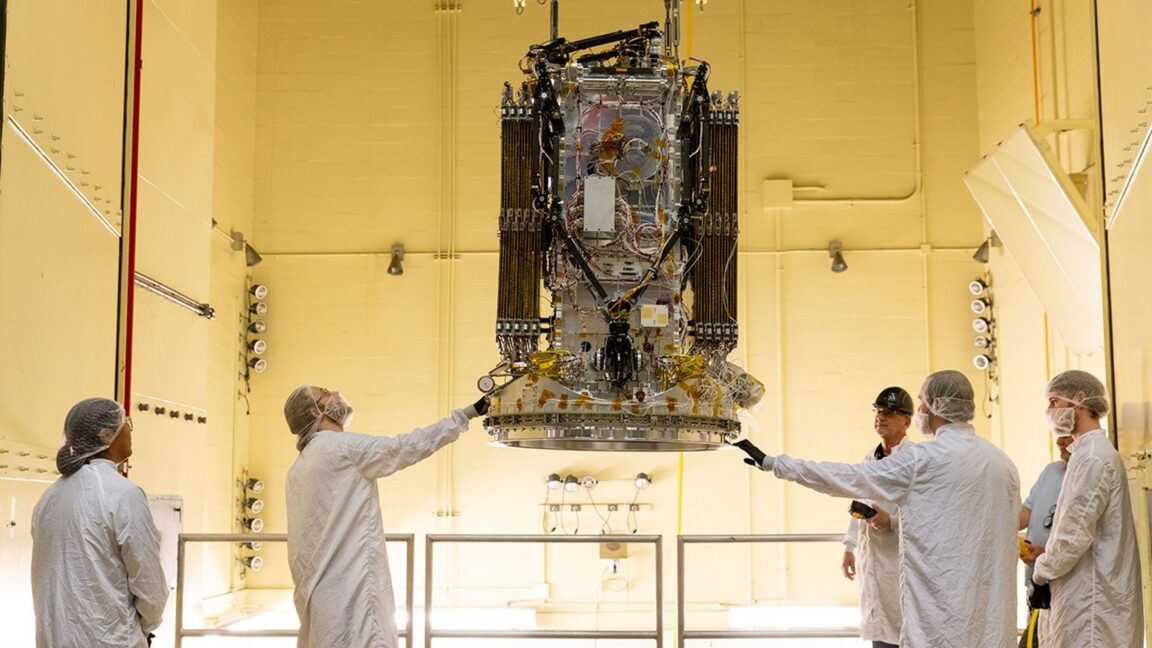
# A Bold Satellite Rescue Mission Faces Unprecedented Technical Challenge
Space debris mitigation reached a critical inflection point as an unprecedented satellite rescue mission launched with minimal preparation time. The effort targets a stranded spacecraft in orbit, representing the first attempt of its kind to retrieve and stabilize a disabled satellite using active intervention rather than passive monitoring.
The mission compressed what normally takes years of planning into months. Engineers designed custom hardware, validated untested procedures, and coordinated across multiple space agencies and private contractors to meet an aggressive timeline. The compressed schedule reflects both the urgency of preventing additional orbital debris and the maturation of space robotics technology.
The core challenge involves capturing or stabilizing a satellite without causing it to tumble further or fragment. Any miscalculation during approach or grappling could trigger secondary debris creation, potentially making the situation worse. The spacecraft itself operates under constraints: limited fuel reserves, communication delays measured in seconds, and an unforgiving environment where mistakes cannot be corrected through physical inspection.
Success hinges on several technical firsts. The rescue vehicle must achieve precise proximity operations with a non-cooperative target. Rendezvous and docking systems typically require the target satellite to be stable and cooperating. This mission has neither advantage.
The quoted sentiment reflects realistic expectations. Even the attempt itself validates new capabilities in orbital servicing technology. Private companies and government agencies have invested heavily in on-orbit repair and refueling concepts. This mission tests whether those capabilities work under pressure with real consequences.
The broader implications extend beyond this single satellite. Success demonstrates that space agencies can respond rapidly to orbital emergencies. It validates investment in autonomous rendezvous technology and remote manipulation systems. Failure, conversely, would highlight genuine technical barriers to active debris removal.
The mission also carries geopolitical weight. Nations increasingly view satellite servicing as a strategic capability. Demonstrating competence in rapid response operations strengthens