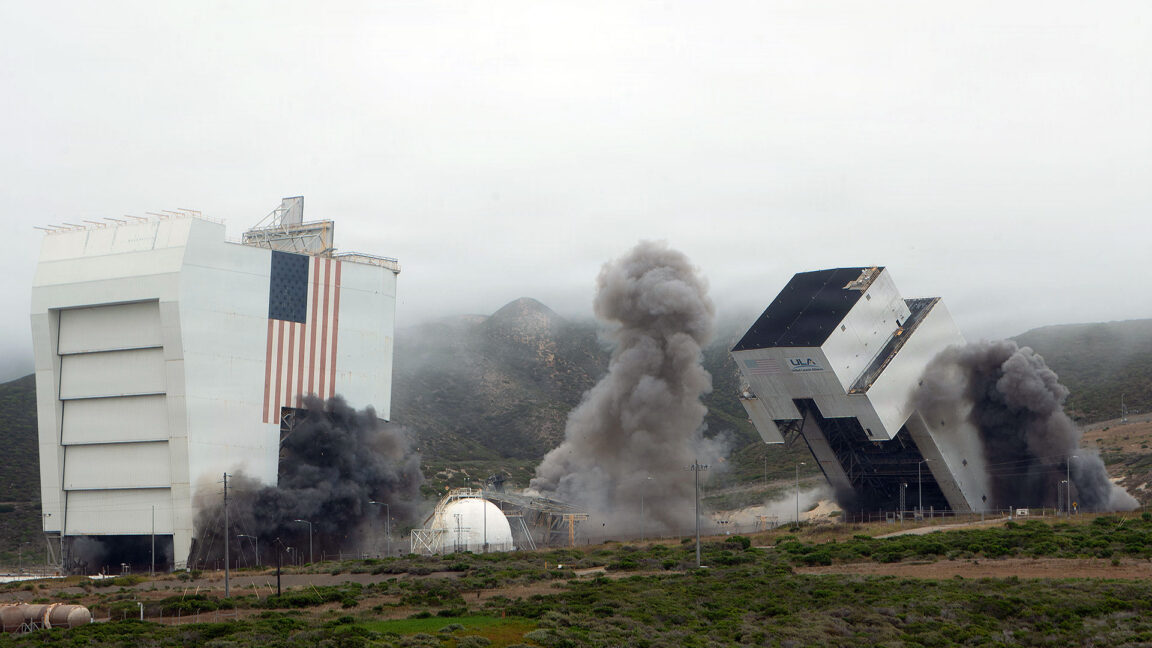
SpaceX demolished historic launch infrastructure at Vandenberg Space Force Base in California to make room for Starship operations. The towers, originally built for the Space Shuttle program in the 1960s, stood at Space Launch Complex-6 (SLC-6) for decades before their removal.
The demolition marks a practical pivot in how the U.S. space industry uses its existing facilities. Rather than retrofit aging Shuttle-era hardware, SpaceX razed the structures to build ground support systems tailored to Starship's specifications. This approach reflects the economics of modern heavy-lift rockets, which demand different fueling, hold-down, and launch pad configurations than the Shuttle required.
SLC-6 holds particular historical weight. It began construction in the 1960s as part of America's space race efforts and represented six decades of accumulated innovation. The complex never launched a Shuttle in an operational capacity, though it served as a test and processing facility. Its towers witnessed the evolution of spaceflight technology across multiple eras.
The move consolidates SpaceX's west coast launch capability. Vandenberg already hosts Falcon 9 operations for polar and sun-synchronous orbit missions. Adding Starship capacity here diversifies SpaceX's launch footprint beyond Starbase in Texas and positions the company to serve national security missions that require polar access.
For the Space Force, demolishing the old infrastructure solves a maintenance burden. Keeping 60-year-old shuttle towers operational costs money without serving current missions. SpaceX's investment in new facilities represents a more efficient use of federal real estate.
The demolition also reflects broader industry trends. Modern rocket design increasingly values simplicity and rapid reusability over legacy infrastructure compatibility. SpaceX's Starship prioritizes frequent launches and quick turnaround times, neither of which aligns well with Shuttle-era